
Want to see the Dolomites at their most incredible? You’ll need a lift ticket. The trails, meadows, and jagged ridgelines that fill your Instagram feed often sit high above the valley towns, and Dolomites cable cars are how most people get there. Knowing which lift goes where, and what it costs, saves you time, money, and a few wrong turns.
The first time Chris and I stepped off the Mont Sëuc gondola onto Alpe di Siusi, we both said “wow.” I couldn’t understand half the languages around us, but I’d bet they were all saying “wow” too. Blue sky, green meadows, and mountains in every direction. That was one of 7 lifts we rode up the Dolomites, from Ortisei to Passo Falzarego to the Marmolada glacier. Here’s what each one cost, how to get tickets, and the views waiting at the top.
7 Dolomites Cable Cars at a Glance
This page may contain affiliate links. If you choose to click on one of the links and then make a purchase, Just Wander More may earn a small commission. The commission is paid by the company at no extra expense to you. Read the full disclosure here.
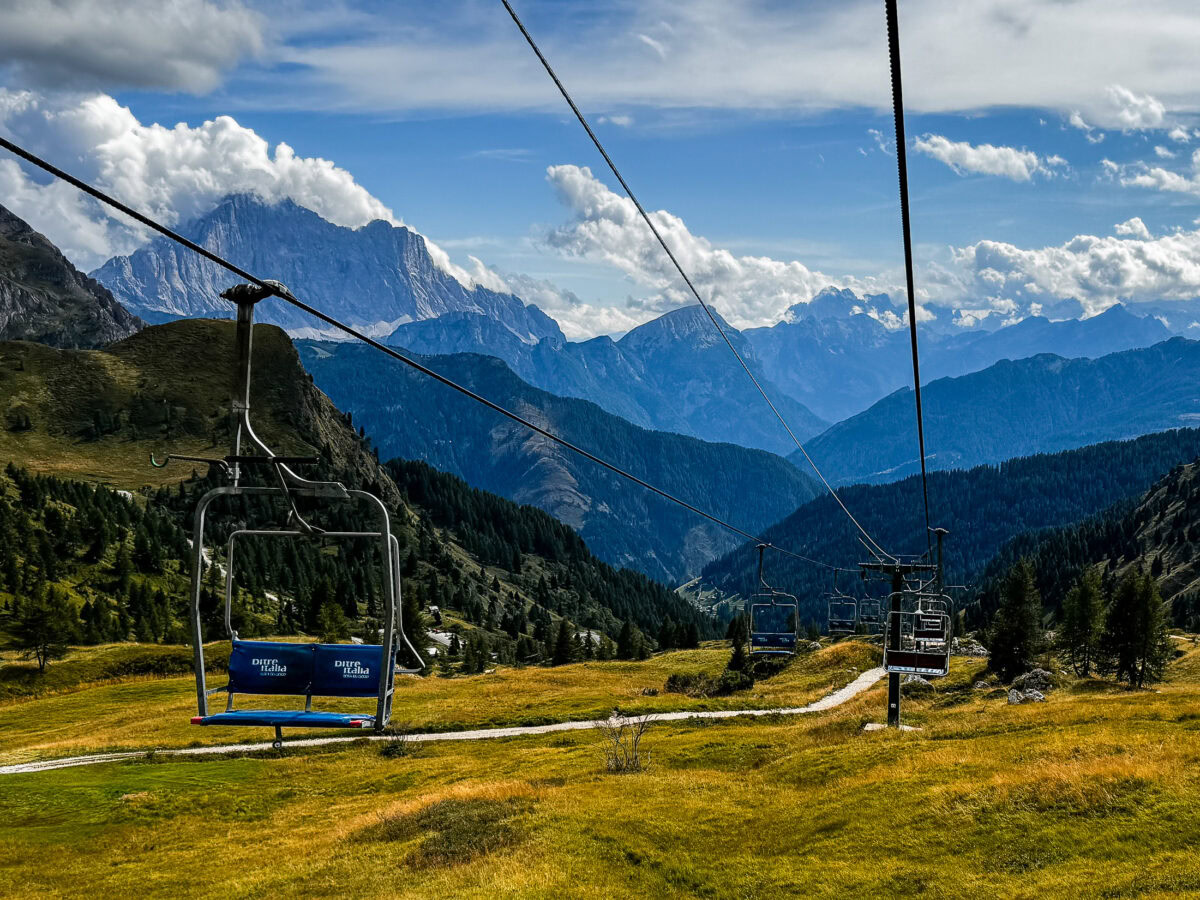
If you just want the numbers, here they are. Chris and I rode 7 lifts across the Dolomites in summer 2026, and this table shows what we paid per person and where each lift takes you. The grand total was €230 each. None of them required a reservation. Seceda recommends booking ahead in busy months, but we could have bought tickets at the base station and gone up much earlier than our time slot.
| Lift | Access To | Cost Per Person* |
|---|---|---|
| Seceda, Ortisei | Seceda Ridge | ~€70.50 round trip |
| Mont Sëuc, Ortisei | Alpe di Siusi | ~€39 round trip |
| Seiser Alm Bahn, Siusi | Alpe di Tires on Alpe di Siusi | ~€30 round trip |
| Panorama Chairlift, Alpe di Siusi | Alpe di Tires | ~€12.50 round trip |
| Fedare Chairlift, Passo Giau | Cinque Torri, Nuvolau & Averau | ~€18 round trip |
| Lagazuoi, Passo Falzarego | Lagazuoi & WWI Tunnels | ~€20 one way |
| Malga Ciapela | Marmolada & Punta Rocca | ~€40 round trip |
| Total | ~€230 |
*Prices we paid in late August 2026, high season. Prices change by season and year.
Want to see how these lifts fit into a full trip? Here’s my Dolomites itinerary with where we stayed each night.
How Dolomites Cable Cars Tickets Work
Buying a ticket for a Dolomites cable car is easy once you know how it works. Every lift sells its own tickets at the base station, usually one-way or round trip, and most take credit cards. A few let you buy online ahead of time. Passes like the Dolomiti Supersummer Card cover multiple lifts, but only if you ride enough to make the math work. More on that below.
Timed Entry vs. Walk-Up Tickets
Most Dolomites lifts work on a walk-up basis: buy your ticket at the base station and get in line. Some let you book a time slot online, which is a good idea in July and August when lines get long.
Chris bought our Seceda tickets in advance, thinking the lines would be long. Reality? It was a cold, rainy day. Seceda operators wouldn’t let you board more than 15 minutes before your time slot, and we didn’t know that rule. We showed up at 8:40 for our 9:30 slot, waited until 9:15, and watched the rain clouds roll in. Unless you’re visiting in peak season, a walk-up ticket gives you more flexibility. You can ride as soon as you get there instead of waiting for a time slot.
Buying Tickets Online
Buying online makes sense when you want to skip the ticket line, especially in the busy season.
- Lagazuoi: Buy tickets on the website in advance and walk straight to the cable car in the morning. You get 5% off whether you buy online or pay by credit card at the ticket office.
- Seceda: Tickets are sold online for a set time slot, but that locks you in. You can’t board more than 15 minutes early.
- Dolomiti Supersummer Card: Sold online through the Dolomiti Superski shop, or in person at participating lifts.
Everywhere else we rode, buying at the base station was quick and easy.
Lift Seasons & Hours
Most Dolomites lifts run from late May or June through mid-October, and a few open in early May and stay open into November. Exact dates shift a little each year, so check each lift’s website before you go.
- Seceda: Late May–early November, 8:30 am–5:30 pm
- Mont Sëuc (Ortisei to Alpe di Siusi): Early May–early November, 8:30 am–6:00 pm (closes at 5:00 pm in spring and late fall)
- Seiser Alm Bahn (Siusi): Late May–early November, 8:00 am–7:00 pm in summer (closes at 6:00 pm in spring and fall)
- Panorama Chairlift: Late May–mid-October, 8:30 am–5:30 pm in peak summer (closes at 5:00 pm in spring and fall)
- Fedare Chairlift: Mid-July–mid-September, 9:00 am–5:00 pm
- Lagazuoi: Early June–mid-October, 9:00 am–5:00 pm (last ride up at 4:40 pm)
- Marmolada: Mid-June–late September, first ride up at 9:00 am, last ride down from Punta Rocca at 4:30 pm
Fedare has the shortest season. Outside those dates, you can still reach Cinque Torri by taking the 5 Torri chairlift from Bai de Dones (early June–mid-October, 9:00 am–5:00 pm).
Is the Dolomiti Supersummer Card Worth It?
The Dolomiti Supersummer Card is the region’s big lift pass: one card for more than 100 lifts across the Dolomites, sold as a day pass, a multi-day pass, or a season pass. It sounds like a no-brainer until you do the math. For Chris and me, single tickets came out cheaper. Here’s what the card covers, what it costs, and how our 7 lifts added up.
What the Card Covers
The card covers lifts all over the Dolomiti Superski area, from Val Gardena and Alpe di Siusi to Cortina and Val di Fassa. Bike transport is included, and kids under 8 ride free with a paying adult.
- Day ticket: €67
- 3 days within 4: €145
- 5 days within 7: €185
- Season pass: €415
The multi-day options don’t have to be consecutive days, so a rainy day in the middle won’t cost you a ride.
The card covers 6 of the 7 lifts we rode—excluding Seceda. It isn’t accepted on the Ortisei–Furnes, Furnes–Seceda, or Fermeda lifts. That’s easy to miss if you’re staying in Ortisei, since the Mont Sëuc gondola to Alpe di Siusi accepts the card but the Seceda lifts across town don’t.
The Math on Our 7 Lifts
Since the Dolomiti Supersummer Card doesn’t cover Seceda, that leaves 6 lifts the card does cover:
- Mont Sëuc: €39
- Fedare Chairlift: €18
- Lagazuoi: €20
- Marmolada: €40
- Seiser Alm Bahn: €30
- Panorama Chairlift: €12.50
We paid €159.50 each in single tickets for those 6 lifts. The closest card option, 5 ride days within 7, costs €185. Our lift days were also spread over 10 days, so they wouldn’t have fit in its 7-day window anyway. For the way Chris and I planned to hike, single tickets were the better deal.
The Dolomiti Supersummer Card is worth the investment when:
- You ride 2–3 lifts a day, especially the pricier cable cars.
- Your lift days fit inside a 4-day or 7-day window.
- You’re mountain biking and riding lifts multiple times each day.
- You’re spending the whole summer, and the €415 season pass beats everything.
Related Post: 23 Tips for Planning a Trip to Italy: What to Know Before You Go
1. Seceda Cable Car: Ortisei to the Seceda Ridge
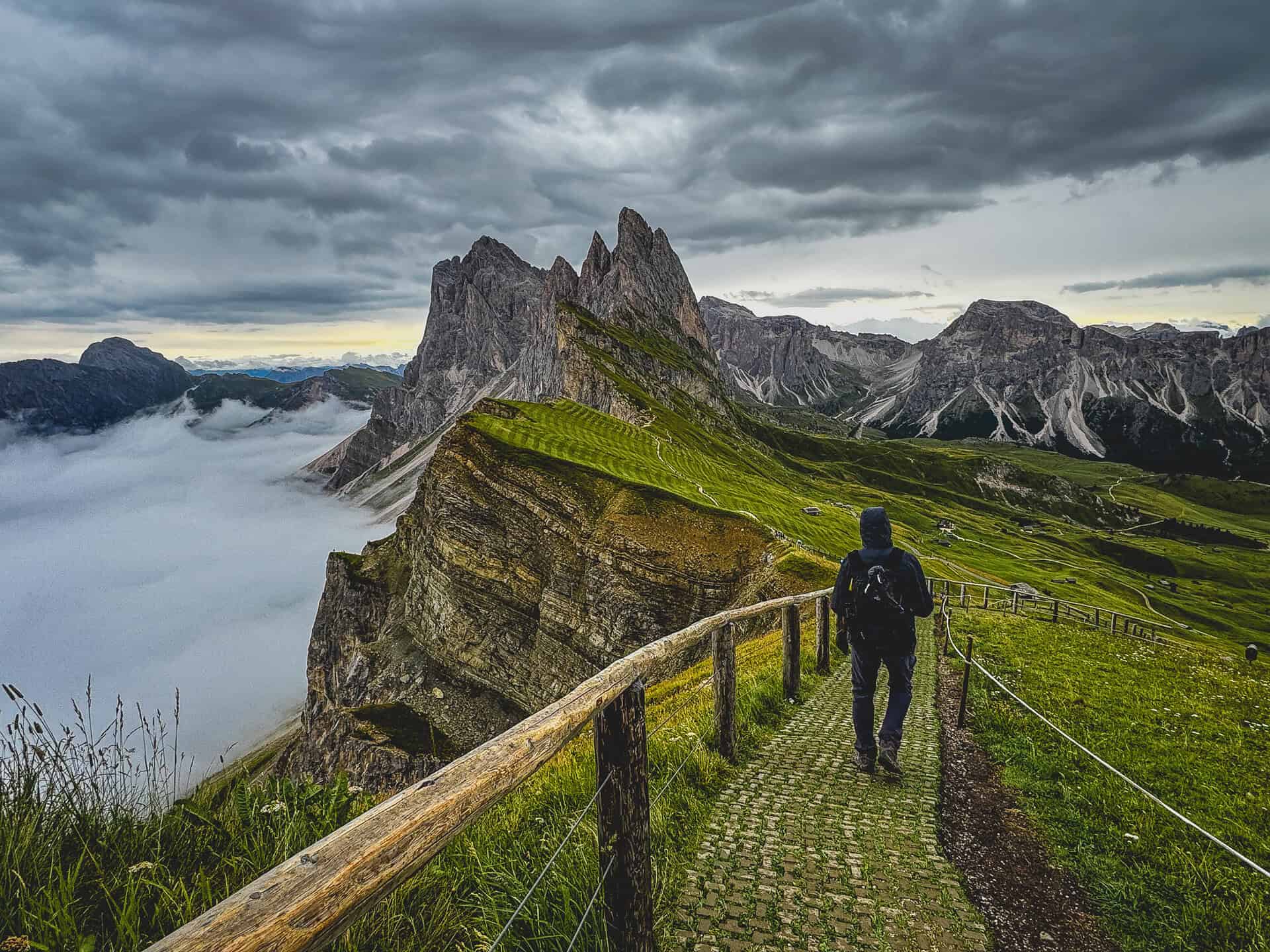
Seceda is the ridge you may have seen on Instagram: grassy slopes that rise gently, then drop off in a row of jagged peaks. Chris and I rode up on a gray morning, switching from a small gondola to the big Seceda cable car at Furnes for the final climb. It was so much colder at the top that we pulled on our puffy vests and rain jackets right away, and I wished I’d brought my gloves. We made it to the ridge viewpoint before the rain started in earnest. Then the trail turned to mud, and we headed back. On a clear day, Chris and I would have spent hours up there.
- Base Station: Ortisei, in the center of town
- Type: Gondola to Furnes, then cable car to the top
- Ride Time: About 20 minutes
- Cost (per person): €70.50 round trip
- Parking: Parking in Ortisei is limited. The base station was a 5-minute walk from our hotel.
- Reservations: Not required, but recommended in the busy summer months. If available, walk-up tickets give you more flexibility.
Related Post: Where to Stay in the Dolomites, Italy: 3 Ideal Places
2. Mont Sëuc Gondola: Ortisei to Alpe di Siusi
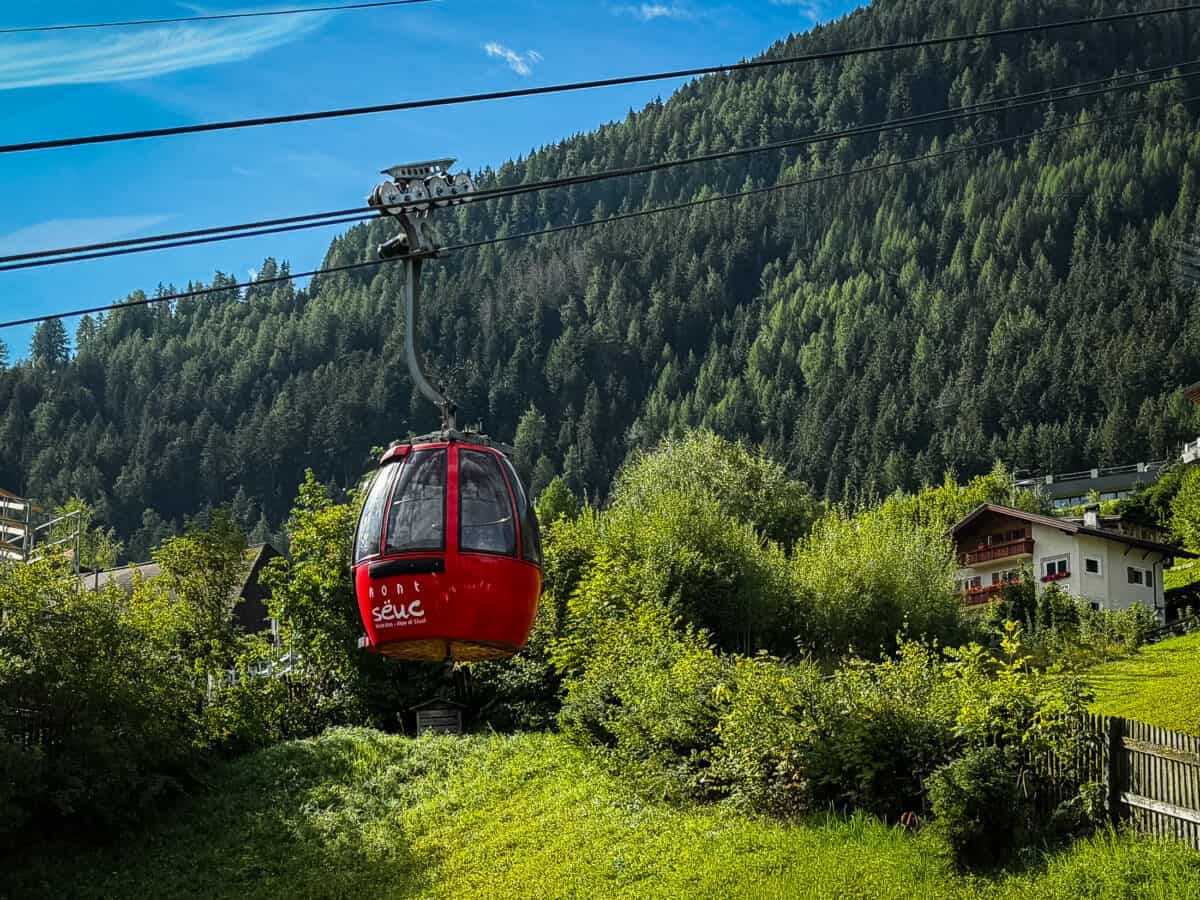
The day after Seceda, we woke up to blue skies and took the Mont Sëuc gondola from the other side of Ortisei. We bought tickets on the spot, and less than 15 minutes later we stepped out onto Alpe di Siusi, the biggest high-alpine meadow in Europe.
From the top station, trails head left or right, and both start with a descent into the meadow. That means a long, steady climb back up to the gondola at the end of the day.
- Base Station: Ortisei, across town from the Seceda lift
- Type: Gondola
- Ride Time: Under 15 minutes
- Cost (per person): €39 round trip
- Parking: We walked less than 10 minutes from our hotel in Ortisei to the base station.
- Reservations: Not required. We walked up and bought tickets at the base station.
Related Post: 10 Best Hikes in the Dolomites: Epic Trails & Views
3. Alpe di Siusi Cable Car (Seiser Alm Bahn) From Siusi
For our second trip up to Alpe di Siusi, we arrived on the other side of the meadow. We were staying in Castelrotto, and the Seiser Alm Bahn base station in Siusi was an easy walk from our hotel. The Alpe di Siusi cable car dropped us at the opposite side of the meadow from the Mont Sëuc gondola in Compaccio, right where Chris and I had stopped for our picnic the week before. If you’re staying in Castelrotto or Siusi, this is the easiest way to reach Alpe di Siusi.
- Base Station: Siusi (Seis), within walking distance of Castelrotto
- Type: Gondola
- Ride Time: About 15 minutes
- Cost (per person): €30 round trip
- Parking: We walked from our hotel in Castelrotto.
- Reservations: Not required. We walked up and bought tickets at the base station.
4. Panorama Chairlift on Alpe di Siusi
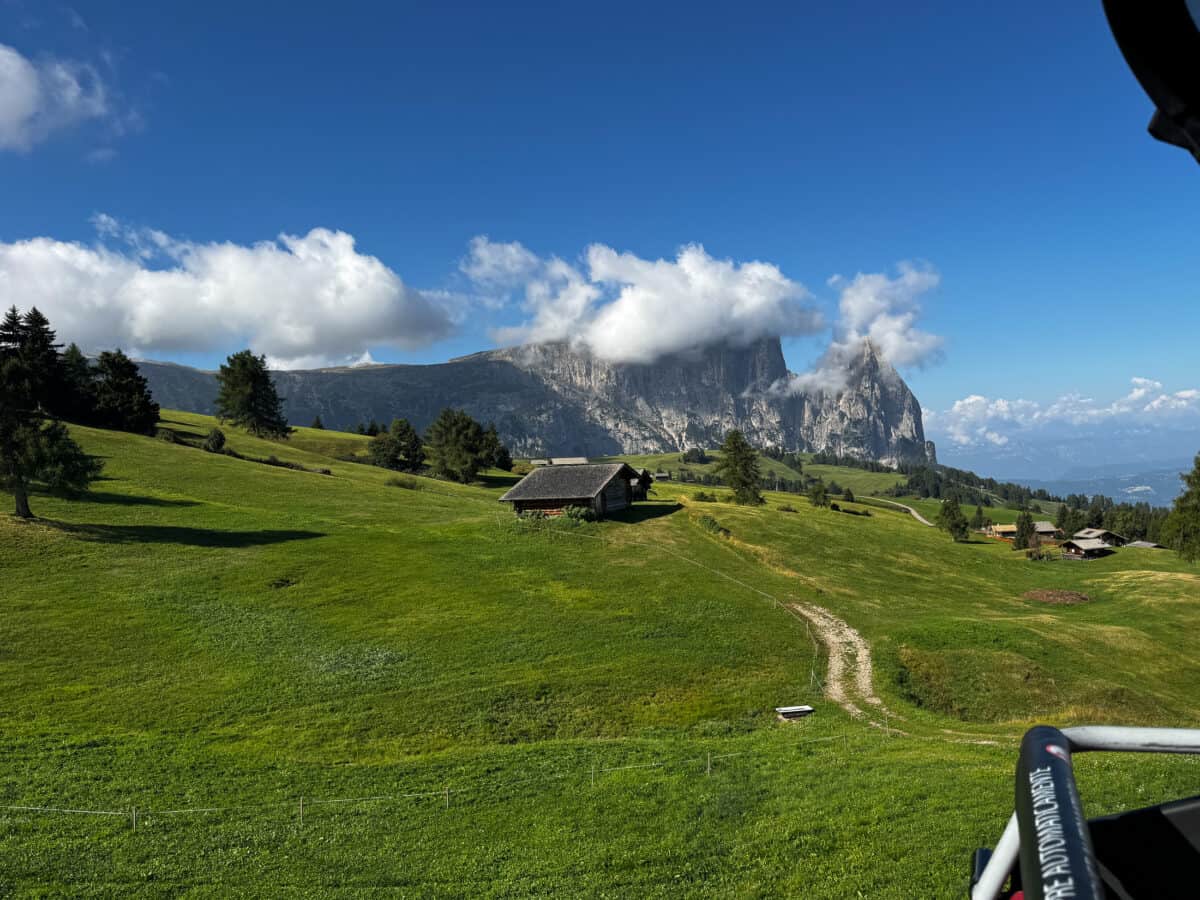
The Panorama chairlift is a short ride up from the meadow after a few minutes’ walk from the Seiser Alm Bahn top station. Chris and I rode it up to start our hike toward the Alpe di Tires trailhead and rode it back down at the end of the day. We could have skipped it, but with an 8.9-mile (14 km) hike and over 2,428 feet (740 m) of elevation gain, it was a nice break.
The six-seat chairs have a canopy you can pull down in bad weather, but on a sunny day we left it up and enjoyed the open views. The real reward was at the hut on the Alpe di Tires side: Kaiserschmarrn, a shredded pancake dusted with powdered sugar, and one of the best snacks of our whole trip.
- Base Station: A short walk from the Seiser Alm Bahn top station on Alpe di Siusi
- Type: Chairlift (6-seat, with canopy)
- Ride Time: About 5 minutes
- Cost (per person): €12.50 round trip
- Parking: None needed. We walked to the chairlift from the Seiser Alm Bahn top station.
- Reservations: Not required. Buy tickets at the lift.
5. Cinque Torri: Fedare Chairlift From Passo Giau
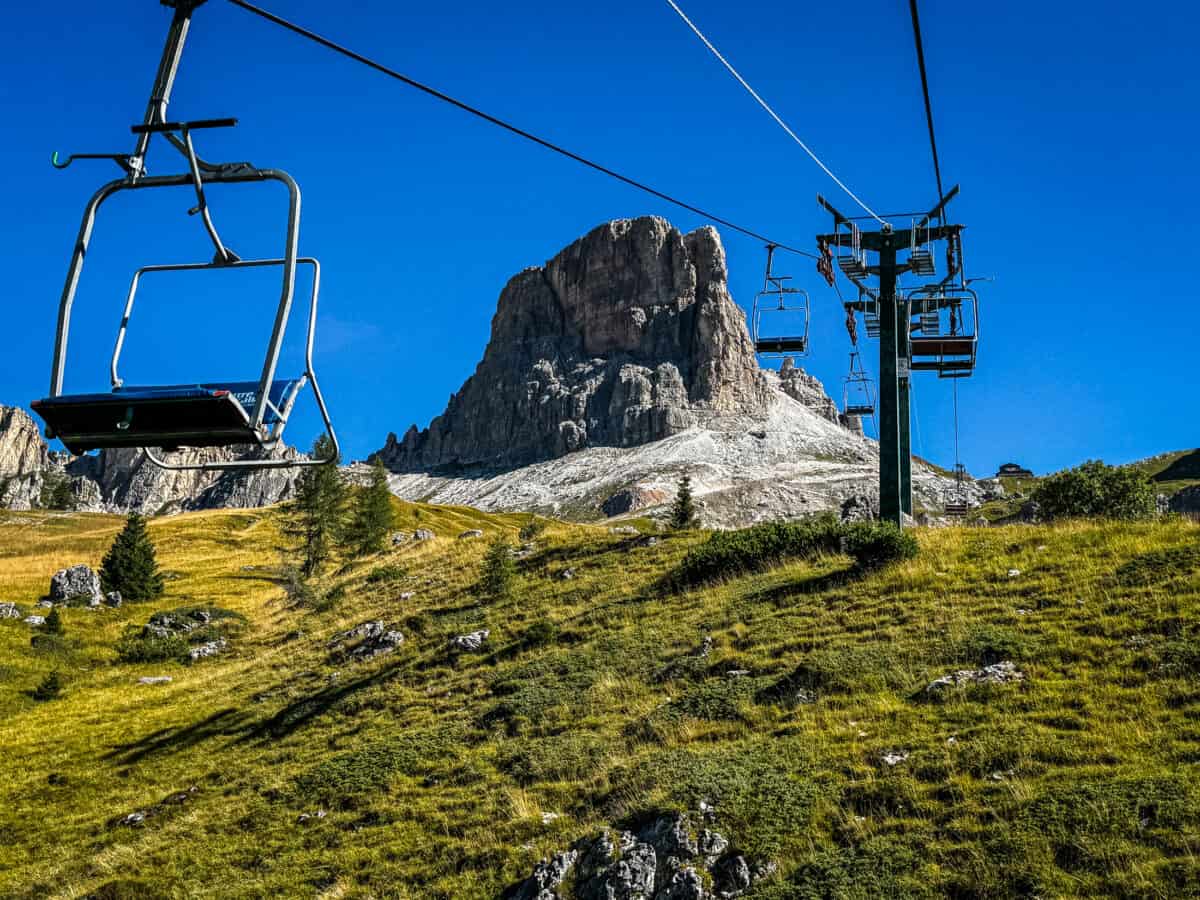
Getting to the Fedare chairlift is half the adventure. The road up Passo Giau has 29 numbered hairpin turns and a steady 9% grade, and it’s a regular stage in the Giro d’Italia (bike race). We passed plenty of cyclists on the way up. The chairlift starts at Rifugio Fedare, near the top of the pass, and glides up the mountain to drop you at Rifugio Averau.
From there, Chris and I hiked up to Rifugio Nuvolau for the views, then down to Cinque Torri, the “five towers,” where we picnicked on the grass and walked through WWI trenches and fortifications. Instead of climbing straight back up, we took a trail around Mount Averau to Rifugio Averau. For lunch, I ordered a burger so big I folded the top bun in half like a taco shell and ditched the bottom one.
- Base Station: Rifugio Fedare, Passo Giau
- Type: Open chairlift
- Ride Time: About 15 minutes
- Cost (per person): €18 round trip
- Parking: Cars lined the road in both directions on a busy day. Get there early.
- Reservations: Not required. Buy tickets at the base station.
Note * The Fedare chairlift has the shortest season of any lift we rode, from mid-July to mid-September. Outside those dates, take the 5 Torri chairlift from Bai de Dones to Rifugio Scoiattoli, right at the base of the towers.
6. Lagazuoi Cable Car at Passo Falzarego

The Lagazuoi cable car runs every 15 minutes and climbs the cliff face fast. At the top, Chris and I followed the Austrian Mountain Troop Path to a few lookout points, then started down through the WWI tunnels carved into the mountain.
Learn from our mistake: pick up a helmet at the base station before you ride up. We didn’t know, and I bonked my head more than once. Bring a headlamp that works, too. Mine died, and Chris handed me a small flashlight. The tunnel descent took us about 45 minutes and popped us out on Martini Ledge for a well-earned snack.
- Base Station: Passo Falzarego
- Type: Cable car
- Ride Time: About 3 minutes
- Cost (per person): €20 one way
- Parking: There’s a lot next to the cable car station, and we got one of the last spots. Get there early.
- Reservations: Not required. Buy online the day before to skip the line, and save 5% whether you buy online or pay by card at the ticket office.
7. Marmolada Cable Car: Malga Ciapela to Punta Rocca
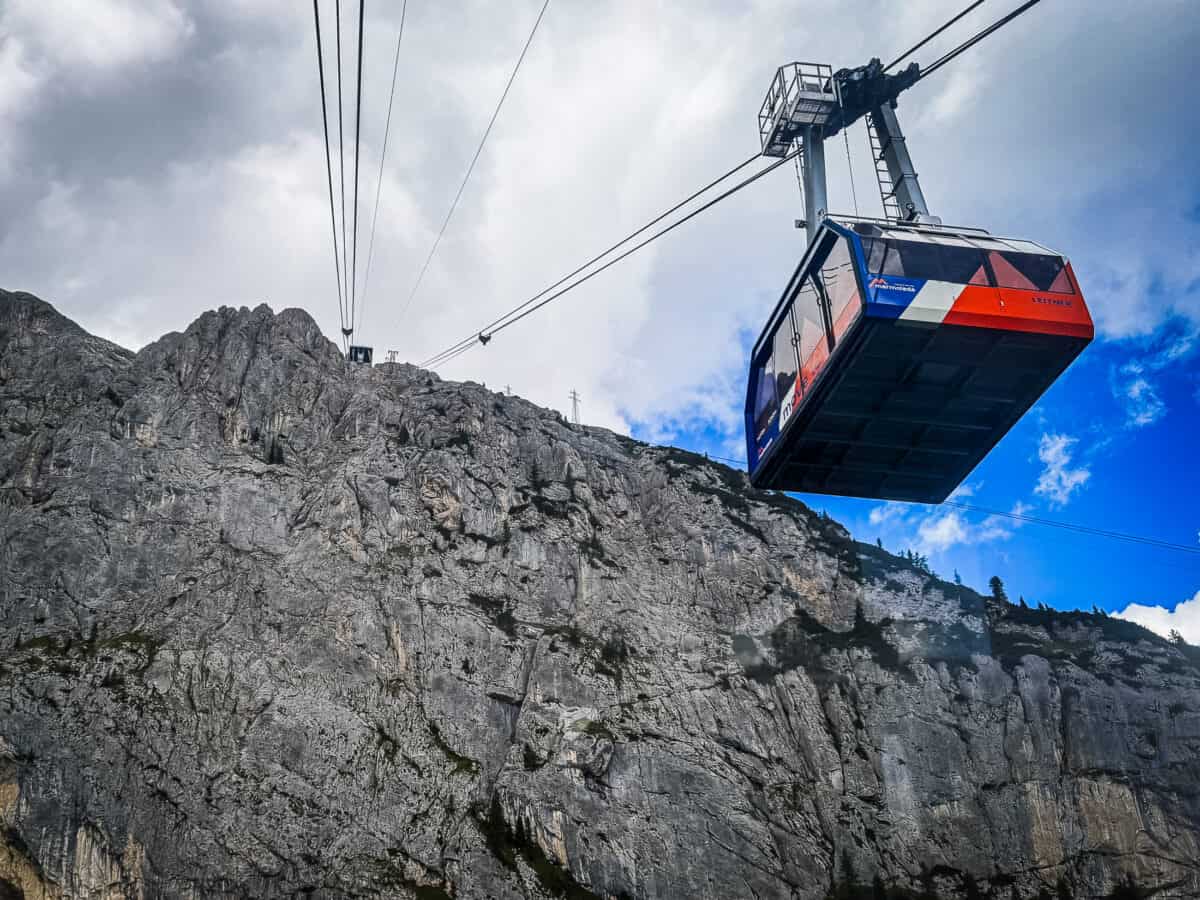
The Marmolada cable car system is the big one. It takes three stages to climb from Malga Ciapela to Punta Rocca, at 3,265 m (10,712 ft) the highest point we reached on the whole trip. Chris and I changed cabins at Antermoia, then got off at Serauta, the middle stop, to see the WWI museum and the tunnels dug through rock and ice during the war.
We were in the clouds most of the morning, with the occasional peek of blue sky and glacier. At the top, the views were hidden, but we watched workers peeling back the giant covers that protect the glacier from the summer sun. It’s not something you see every day.
- Base Station: Malga Ciapela
- Type: Cable car, 3 stages
- Ride Time: About 12 minutes in the air, plus stops, changing cabins, and waiting for the next departure
- Cost (per person): €40 round trip
- Parking: There’s plenty of paid parking in the lot next to the base station.
- Reservations: Not required. Buy tickets at the base station, and keep them handy. You’ll scan them again to board each cable car on the way up.
Tips for Riding Dolomites Cable Cars
Cable Car Tips
After taking 7 lifts, here’s what I’d tell anyone riding Dolomites cable cars for the first time.
- Get there early. Parking at the passes fills fast. Cars lined the road at Passo Giau, and we got one of the last spots at Lagazuoi.
- Check the weather before you ride. Clouds can roll in fast and hide the views you paid for. Many lifts have webcams on their websites, so take a look before you go.
- Pack layers. It’s much colder and windier at the top. We pulled on puffy vests and rain jackets at Seceda, and I wished I’d brought gloves.
- Know the time for the last ride down. Most lifts stop between 4:30 and 5:30 pm. Marmolada’s last cable car down leaves Punta Rocca at 4:30.
- Keep your ticket handy. On multi-stage lifts like Marmolada, you scan it again at every stop.
- Pick your lift if you’re nervous about heights. Gondolas and cable cars are fully enclosed. Chairlifts like Fedare are open-air.
- Move over. Operators try to fill cable cars as full as possible, so step toward the back or sides as you board. If you want photos, grab a window spot early.
- Shoot through clean glass. Cabin windows can be scratched and smudged. Find a clear spot and hold your phone close to the glass to cut glare.
Italy Quick Facts
- Official Language: Italian
- Capital City: Rome
- Population: 58.9 million
- Currency: Euro (€ or EUR)
- Power Outlet: Type L (3 round prongs) is standard and Type C (2 round pins)
- Emergency Number: 112
- Drive on the: Right side of the Road
Frequently Asked Questions
What’s the difference between a cable car, a gondola, and a chairlift?
A cable car has one or two large cabins that shuttle back and forth, like Lagazuoi and Marmolada. A gondola has many small cabins that loop continuously, like Mont Sëuc. A chairlift has open seats, like the Fedare chairlift. Gondolas and cable cars are fully enclosed, so they’re the better choice if you’re nervous about heights.
How much do Dolomites cable cars cost?
Most round-trip tickets run €12–€71 per person. Chris and I paid €230 each for 7 lifts in summer 2026. Seceda was the most expensive at €70.50, and the Panorama chairlift was the cheapest at €12.50.
Do you need to book Dolomites cable cars in advance?
No. Every lift we rode sold walk-up tickets at the base station. Some, like Seceda and Lagazuoi, also sell tickets online, which can save time in busy summer months. Just know that Seceda’s online tickets lock you into a time slot.
Is the Dolomiti Supersummer Card worth it?
It depends on how many lifts you ride. The card pays off if you ride two or three lifts a day within a short window. We rode one or two lifts a day spread over 10 days, so single tickets were cheaper. The card also doesn’t cover the Seceda lifts.
When are Dolomites cable cars open?
Most summer lifts run from late May or June through mid-October, roughly 8:30 or 9:00 am to 5:00 or 6:00 pm. A few open in early May and run into November, and some, like the Fedare chairlift, only run from mid-July to mid-September.
How much is the Seceda cable car?
We paid €70.50 per person round trip in summer 2026, the most of any lift on our trip. The Dolomiti Supersummer Card isn’t accepted on the Seceda lifts.
Which Dolomites cable car goes the highest?
The Marmolada cable car system climbs from Malga Ciapela to Punta Rocca at 3,265 m (10,712 ft), with two stops along the way. It was the highest point of our trip.
Love this Post? Pin it!
What Goes Up Must Come Down
Seven lifts, €230 each, one rainy ridge, one bonked head, and more “wow” moments than I can count. Dolomites cable cars aren’t just a ride up. They’re your shortcut to the trails, meadows, and WWI tunnels that make this place unforgettable. Even on a sunny day, it’s cooler at the top, and the weather can change fast, so a few smart layers go a long way.
Grab my free Dolomites Hiking Packing List so you’re ready for the rain, the wind,or fabulous sunshine and warmth once you step off the lift.
You may also love…
- 10 Best Things to Know for Planning a Dolomites Hiking Trip
- 15 Best Things to Do in the Dolomites, Italy
- Tre Cime di Lavaredo Hike in the Dolomites: Best Trail & Parking Tips
- 30 Essential Tips for Driving Through Mountains
- 15 Most Beautiful Places in Italy for Photographers
- 15 Best Cities & Towns in Northern Italy You Need to Visit
- Paragliding Mt Pilatus: Plus 10 Amazing Adventures on This Swiss Mountain
- Gondola in Estes Park: Reopening, Tickets & Tips