
The Dolomites in Italy have been on my bucket list for years, long before the 2026 Winter Olympics showcased those jagged peaks to the whole world. Chris and I debated waiting until the crowds died down, but when the timing lined up with the end of summer of 2026, we decided not to wait any longer on planning a Dolomites hiking trip.
This isn’t a hut-to-hut trek. We’re doing day hikes from a home base each night, which comes with its own kind of planning. Chris and I have spent months training, sorting out flights and hotels, and figuring out exactly what to pack, so here’s everything that’s gone into getting ready before we ever set foot on a trail.
10 Essential Tips for Planning a Dolomites Hiking Trip
This page may contain affiliate links. If you choose to click on one of the links and then make a purchase, Just Wander More may earn a small commission. The commission is paid by the company at no extra expense to you. Read the full disclosure here.

Planning a Dolomites hiking trip involves a lot more moving pieces than picking a trail and packing a bag. Between flights, hotels, rental cars, gondola reservations, training, and what actually goes in your suitcase, there is a lot to sort out before you ever set foot on a trail in the Italian Alps. If this is your first trip to Italy, start with my guide to planning a trip to Italy for the country-wide basics.
For the Dolomites specifically, my Dolomites itinerary covers the route, where to base yourself, and how to get around, and my 10 Best Hikes in the Dolomites breaks down which trails made the cut. Then use these ten tips for everything to do with the hiking itself: logistics, training and what to pack.
1. Best Time to Visit the Dolomites for Hiking
Hiking season in the Dolomites generally runs from June through September, though the exact window shifts depending on how much snow lingers over the high passes. Early summer trails can still have snow patches up high, and some gondolas and mountain refugi do not fully open until mid-June.
September brings cooler mornings, thinner crowds, and usually more settled trail conditions, which is part of why the end of summer worked for us. If you have a specific route in mind, check trail and rifugio opening dates before you lock in flights, since conditions can shift your plans more than you would expect.
| Season | Temps | Snow & Crowds |
|---|---|---|
| Spring (Apr–May) | 40–55°F (4-13°C) | Snow lingers on high trails; lifts & rifugios often closed until June. Crowds low. |
| Summer (Jun–Aug) | 65–80°F (18-27°C) afternoon storms common | Mostly melted by July, patches possible in early June. Crowds high, especially July–Aug. |
| Fall (Sep–Oct) | 50–65°F (10-18°C) days cooler nights | Trails snow-free; first dusting possible late October. Crowds low to moderate, best conditions. |
| November (Shoulder) | 30–45°F (-1 to 7°C) colder at elevation | Snow lingers above 2,000m with icy shaded patches; most gondolas, hotels & restaurants close for the season. Crowds very low, but only low-elevation day hikes are practical. |
| Winter (Dec–Mar) | 14–30°F (-10 to -1°C) | Heavy accumulation; trails closed or snow-covered. Crowds low for hiking, high for skiing. |
What is a Rifugio?
Rifugi (singular: rifugio) are mountain huts scattered across the Dolomites, usually family-run, offering meals, drinks, and sometimes overnight beds to hikers passing through. You will pass several on almost any day hike here, and their seasonal opening dates are a good indicator of how accessible the higher trails are at a given time of year.
Tip * Bring cash. Many rifugi are far from the nearest ATM and do not accept cards, especially for a quick snack, drink, or even an overnight stay in a bunk.
2. Training & Physical Conditioning Before You Go

Day hikes in the Dolomites can run 4 to 7 hours with several thousand feet of elevation gain, so a solid level of fitness is essential when planning a Dolomites hiking trip. Our list of hikes for this trip ranges from easy to genuinely strenuous, so we are training for the hardest day, not the easiest. Each hike below links out to its AllTrails page if you want the exact GPS track and recent trail reviews before you go.
- Seceda Ridge: Easy to moderate, a 3.7-mile (6 km) ridgeline walk from the top gondola station with about 660 ft (200 m) of elevation gain. The gondola up requires a reservation and is €70/pp.
- Alpe di Siusi: Easy, a 6.2-mile (10 km) plateau loop with about 490 ft (150 m) of elevation gain. Gondola is €39/pp.
- Adolf Munkel Trail: Moderate, a 7.5-mile (12 km) loop with about 1,310 ft (400 m) of elevation gain.
- Cinque Torri plus Rifugio Averau/Nuvolau: Easy to moderate, a 3.7-mile (6 km) loop past WWI-era rock towers with about 1,150 ft (350 m) of elevation gain.
- Lagazuoi: Moderate, a 3.1-mile (5 km) route via cable car up with about 165 ft (50 m) of gain and 2,070 ft (630 m) of descent through wartime tunnels. Headlamp mandatory, gloves useful for the cable sections, no via ferrata kit needed.
- Tre Cime di Lavaredo plus the Cadini di Misurina spur: Moderate, an 8.1-mile (13 km) route with about 1,640 ft (500 m) of elevation gain. See my full Tre Cime di Lavaredo hike guide for the parking reservation you’ll need to book in advance.
- Puez-Odle Altopiano: Challenging, 11.2 miles (18 km) with about 2,950 ft (900 m) of elevation gain.
This descent-heavy mix is why Chris and I have logged downhill miles and elevation gains on Colorado trails all summer—strong quads on the way down matter as much as your lungs on the way up. Your training should also include back-to-back hiking days.
Pro Tip * Your boots should be well broken in before you go. Blisters at any elevation are miserable.
Related Post: 25 Incredible Hikes in Colorado Near Denver
3. Book Your Flights Early
Getting to the Dolomites usually means flying into a nearby airport and driving in, since there is no major airport in the mountains themselves. We are flying into Munich and driving south through Austria into South Tyrol, but Innsbruck, Verona, and Venice are all workable options depending on where your trip starts and ends.
We booked our flights using airline miles months in advance, since award seats on the dates and cabin we wanted disappeared quickly, and the aircraft configuration even changed between our outbound and return flights. The earlier you lock in dates, the more control you have over seat selection, layover length, and whether you’re flying on an award ticket or paying cash.
4. Plan Where to Stay in the Dolomites for Hiking
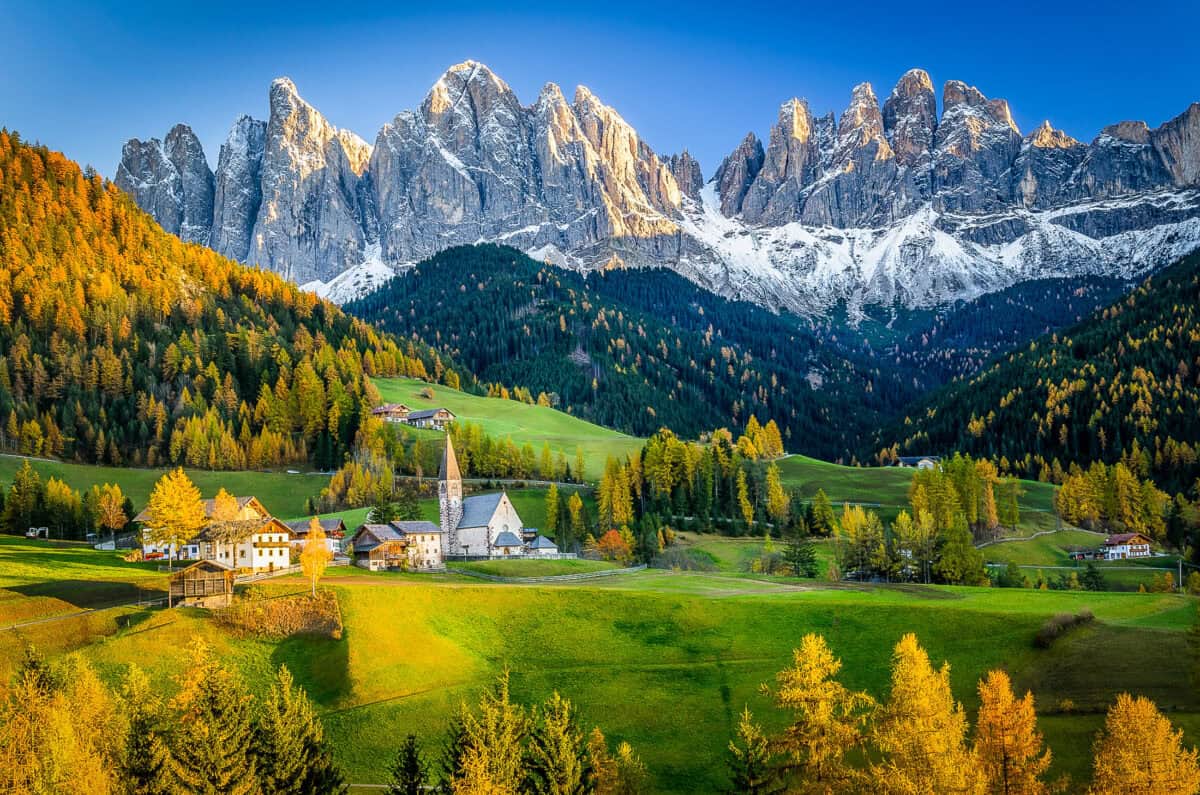
Where you stay depends on which hikes you want easy access to, since the Dolomites span several valleys and no single town puts you close to everything. We split our trip across three bases with meal plans that vary by property. Book your rooms as early as you can, especially for July and August, since South Tyrol’s most walkable towns sell out months ahead. Look for a hotel within walking distance of a town center or gondola station so you are not adding drive time onto already long trail days.
| Hotel (Base) | Included Meals | Notes |
|---|---|---|
| Hotel Garni Snaltnerhof (Ortisei) | Breakfast only | “Garni” is the standard German/Italian classification for bed-and-breakfast style. Seceda Ridge and Alpe di Siusi hikes are a short walk to the gondola stations from the hotel. |
| Cesa dele Angele (Colle Santa Lucia) | Self-catering | Booked as a “Deluxe Apartment”. |
| Artnatur Dolomites (Castelrotto) | Half board | Breakfast buffet plus table-service dinner (drinks not included); starts with dinner on arrival night, ends with breakfast on departure. |
5. Rent a Car for the Dolomites
Renting a car is pretty much mandatory if you plan to day hike and shift hotel bases the way we are, since bus service between trailheads is limited and most gondola stations are located outside of the towns and villages. We booked a midsize SUV (a Volvo XC40 through Hertz) with unlimited kilometers, since we are covering multiple driving legs between hotel bases plus day trips to trailheads and mountain passes.
We fly into Munich and then drive to the Dolomites; we are budgeting for tolls on top of the rental itself. Austria requires a vignette to use its highways, and for a trip this short it is actually cheaper foro us to buy two 1-day digital vignettes online through ADAC (about €9.60 each) rather than a 10-day pass, one for our arrival day and one for our departure day.
Even with a vignette, the Brenner Pass charges its own toll of about €11.50 each way, and Italy’s A22 autostrada adds per-kilometer tolls on top of that. None of the tolls are expensive individually, but they add up, so plan for it rather than be surprised at the booth.
6. Gondolas: Do I Need a Reservation?

Cable cars make several of these hikes possible or at least much easier, but only two need advance reservations: Seceda and the Tre Cime parking permit. Everything else is walk-up, though buying Lagazuoi tickets online the day before saves you a line. We ran the numbers on multi-day lift passes for both the Val Gardena and Cortina areas and skipped both, since paying individually came out cheaper than any pass option for how many lifts we’re actually using.
| Lift | Reservation? | Cost (2 people) |
|---|---|---|
| Seceda (Ortisei–Furnes–Seceda cableway) | Yes, timed entry, book online in advance in busy months. | €141 |
| Alpe di Siusi (Mont Sëuc gondola) | No, walk-up. | €78 |
| Cinque Torri chairlift | No, walk-up (or skip it and hike up 1.5 mi / 500 ft instead). | €36 |
| Lagazuoi cable car (one-way up) | No, can buy tickets online the day before to skip the line. | €40 |
| Puez-Odle entry (Col Raiser gondola) | No, walk-up. | €70 |
| Marmolada (Malga Ciapela–Punta Rocca), optional detour | No, walk-up. | €80 |
| Nordkette (Innsbruck bonus day) | No, walk-up. | €104 |
As you can see, gondola fees can add up and will be a significant amount to plan into your budget.
7. Parking: What to Plan For
You will need to be mindful of parking as well in certain locations. Tre Cime requires a separate timed toll and parking reservation, about €40 per car for a 7am to 7pm window, and you have to add your rental car’s license plate to the booking in advance. Adolf Munkel Trail has no lift at all, just a roughly €6 parking lot at Zans after a short drive. If your hotel has its own garage, like ours did in Ortisei, budget a small daily fee, generally under €10, with no reservation required.
8. What to Wear Hiking in the Dolomites
Temperatures in the Dolomites can swing 15 to 20°F between the valley floor and a summit or ridge, so plan on dressing in layers rather than picking one outfit for the day.
- Moisture-wicking base layer.
- Above-the-knee leggings for warmer days, plus lightweight hiking pants for cooler mornings and higher elevations. Chris likes the Under Armour HeatGear Compression Shorts.
- Light insulating layer.
- Packable rain shell, since afternoon storms are common even in summer.
- Hiking boots with real ankle support and grip. We’re wearing the same pair for every trail on this list, easy or strenuous, rather than packing a second pair of trail shoes just for the mellow days. One good pair covers everything from Alpe di Siusi to the scree (small loose stones on a trail) on Lagazuoi and Puez-Odle, and it’s one less thing competing for space in a suitcase we’ll be using for two weeks of travel.
- Merino wool socks, which regulate temperature better and resist odor far longer than cotton between laundry days.
- Sunscreen. Yes, you should be wearing it.
- Sun hat and sunglasses.
- Gloves, if you’re doing the Lagazuoi tunnels, since the cable sections inside get cold and rough on bare hands.
9. Dolomites Hiking Packing List

Packing for hotel-based day hikes is different from packing for a hut-to-hut trek, but it still takes some planning given how much the weather and terrain shift day to day. I put together our full Dolomites Packing List, covering everything from boots and layers to the small stuff people forget, like a headlamp for the Lagazuoi tunnels. Grab it below and use it as your starting point, then adjust based on which of these hikes are on your list.
Luggage to Bring
With three hotel changes and a rental car rather than a hut-to-hut trek, we have more flexibility than most Dolomites packing guides assume. Chris and I are each bringing our own suitcase for clothes, plus one shared bag just for hiking gear—a REI Traverse 32 backpack filled with our boots, trekking poles, and other gear that doesn’t need to get dug out of a suitcase every time we get dressed.
Splitting gear from clothes this way means neither of us is rifling through a bag half full of hiking boots to find a clean shirt. Three checked bags total fit easily in a Volvo XC40’s trunk alongside our daypacks. Add a toiletry bag if you’re not sharing one, and you’re set. You’re packing for day hikes and hotel stays, not multi-day trekking from hut to hut, so there’s no reason to overthink this beyond keeping gear and clothes separate.
10. Day Pack Essentials
A small daypack is fine for shorter days like Seceda or Alpe di Siusi, but you’ll feel the squeeze on longer routes like Tre Cime or Puez-Odle. Chris and I are each carrying our own pack in the 30-liter range rather than sharing one: Chris has a The North Face Recon backpack, and mine is a The North Face Surge Luxe 31L for women that pulls double duty as my personal item on the flight and my daypack on the trail, one less bag to pack separately.
Extras to consider:
- At least 2 liters of water per person on longer days, since several of these trails have no reliable water sources along the way. This includes both refillable insulated water bottles and Camelbak hydration reservoirs.
- Lunch and trail snacks.
- Sunscreen you can reapply.
- A packable rain shell, even if the forecast looks clear.
- Trekking poles, which earn their weight on the descents, especially the loose scree coming down from Lagazuoi and the steep drop on Puez-Odle.
- A headlamp for the Lagazuoi tunnels, since parts of that route are pitch black.
- Cash. Rifugios don’t take cards, so plan on landing with a few hundred euros set aside for trail lunches and any overnight stays.
- A warm beanie, since summit and gondola stations can be windy and cold even on a warm day.
- A buff or neck gaiter, for sun, wind, and dust on exposed ridgelines.
Travel Must-Haves
Hiking gear covers the trail days, but a two-week trip through Italy and Austria needs a few more things beyond boots and a daypack. Here’s what else we are bringing along.
Travel Must-Haves
Sunscreen: Use sunscreen every day, not just on your beach days.
Laundry Detergent Pods: If you travel for more than a week, you will likely need to do laundry.
Hand Sanitizer: For all the things you touch throughout the day, hand sanitizer is essential.
Travel Adapter: Not all international countries use the same adapters. Be sure to check before you go. Purchase one here.
Travel Backpack: Chris likes his The North Face Recon Backpack. I use The North Face Surge backpack designed for women.
Crossbody Anti-Theft Bag: Pickpocketing is a real concern in busy cities. A secure crossbody bag keeps your belongings close without the bulk. I love the Travelon Anti-theft Messenger Bag.
Packing Cubes: A game changer for staying organized, especially when you’re moving between cities. Shop packing cubes here.
Portable Power Bank: Long days of sightseeing, navigation, and photography will drain your phone faster than you think. Don’t get caught without one. Shop power banks here.
Walking Shoes: You will cover a lot of ground. Comfortable, broken-in shoes are non-negotiable. Shop walking shoes here.
Favorite Camera: My go-to DSLR is the Canon 6D Mark II and it has never let me down. If you’re ready to go mirrorless, the Canon EOS R6 Mark III is the natural upgrade—and your existing Canon EF lenses work on it with an adapter. New to photography? Start with the Canon EOS R50.
Get a Travel Credit Card: We often travel worldwide for free using travel rewards. The Chase Sapphire Reserve is one of our favorite travel credit cards.
Favorite Electronics: Chris and I are Apple users—watches, phones, tablets, AirPods, and Apple AirTags for security. Don’t forget the cables and chargers too. Check out my electronics suggestions here.
Italy Quick Facts
- Official Language: Italian
- Capital City: Rome
- Population: 58.9 million
- Currency: Euro (€ or EUR)
- Power Outlet: Type L (3 round prongs) is standard and Type C (2 round pins)
- Emergency Number: 112
- Drive on the: Right side of the Road
Frequently Asked Questions
How big are the Dolomites?
The Dolomites are vast and cover about 6,155 square miles (15,942 km²) of northeastern Italy, spanning the provinces of Belluno, South Tyrol, and Trentino. The UNESCO World Heritage-protected core area is smaller, around 548 square miles (1,419 km²).
How many days do you need to hike in the Dolomites?
Most trips work well with at least a week, split across several hiking days, a rest day or two, and some travel time between hotel bases if you’re staying in more than one town.
Do you need a car to hike in the Dolomites?
Yes. Bus service between trailheads is limited, and several trailheads and gondola stations sit outside town, so a rental car gives you the flexibility to change hotel bases and reach different valleys.
Are the Dolomites good for beginners?
Yes, if you choose the right trails. Plenty of routes are short, well-marked, and gently graded, while others are longer and more technical, so beginners should stick to easier, well-reviewed trails first.
Do you need to book cable car tickets in advance in the Dolomites?
It depends on the lift. Most operate on a walk-up basis, but a few of the most popular ones require a timed online reservation, especially during peak summer months, so it’s worth checking each lift’s booking policy before you go.
Do you need a via ferrata kit for the Dolomites?
Not for standard day hikes. Some routes include short sections with cables, tunnels, or scrambling, but a full via ferrata kit is generally only needed for dedicated via ferrata routes, not typical day hikes.
What is the currency in the Dolomites?
The euro. It’s worth carrying cash, since mountain rifugi are often cash-only and don’t accept cards.
Love this Post? Pin it!
Start Packing, It’s Time to Go to Italy!
Planning a Dolomites hiking trip takes real effort before you ever see the mountains, from booking gondola reservations months out to figuring out how many suitcases actually make sense for three hotel changes. Some people manage this whole trip with just one carry-on, so plan what works best for you rather than copying our exact setup. But every hour spent on logistics now means more time on the trail later, instead of untangling a problem you could have solved from your couch.
If you’re just getting started, grab my free Dolomites Packing List so you’re not scrambling to remember everything the night before your flight. If you’re planning a once-in-a-lifetime trip to Italy, this post has you covered on the planning side, so all that’s left is to lace up your boots and go.
You may also love…
- Plan a Trip to Europe: 15 Essential Tips for First-Time Travelers
- 15 Most Beautiful Places in Italy for Photographers
- 15 Best Cities & Towns in Northern Italy You Need to Visit
- Essential Day Hike Packing List—Pack Smart, Hike Happy
- 17 Dreamy Small Towns in Italy Near Florence
- Rome Travel Itinerary: 25 Unforgettable Things to See, Do & Explore
- 15 Best Things To Do in Pompeii: Ancient Ruins Worth Exploring