
Jagged peaks, alpine meadows, and mountain huts make the Dolomites look like a hiker’s dream. But the list of things to do in the Dolomites goes well beyond lacing up your boots. Gondolas, mountain passes, a glacier, lakes, old towns, and Olympic sites in Cortina all made our list. Plus learn what to book ahead, what to pack, where to find the most instagrammable photo spots, and which places we would skip on a return trip.
Chris and I spent two weeks in the Dolomites in August, and it turned out to be so much more than a hiking trip. We rode gondolas up into the clouds, stood on a glacier, picked our way through WWI tunnels with a flashlight and headlamp, and still made time for a massage and a much-needed afternoon by the pool. On a few of the days, I even learned why you want a puffy vest and rain jacket in August.
15 Things to Do in the Dolomites
This page may contain affiliate links. If you choose to click on one of the links and then make a purchase, Just Wander More may earn a small commission. The commission is paid by the company at no extra expense to you. Read the full disclosure here.

You may not come to the Dolomites planning to hike for two weeks straight. In fact, when you’re planning a trip to Italy, the Dolomites might only get a few days on your map before you move on to Rome, Tuscany, or the coast. Either way, here’s list of a few things we found to do—besides hiking—once we started exploring. Think of it as our own Dolomites travel guide to everything that isn’t already covered on the trail.
1. Hike in the Dolomites (Just Copy Our Research)

If you only do one thing on this list, it’s probably this one. We hiked the Alpe di Siusi loop on a perfect-weather day, sweated our way up the Adolf Munkel Weg for dumplings and cowbells at Rifugio Gampen Alm, and white-knuckled across a rockslide on the Tre Cime circuit. I already wrote about every trail, the difficulty level, and what to pack in a full guide, so consider this your permission to skip the research and go straight to the trailhead.
Related Post: Best Hikes in the Dolomites
2. Try Via Ferrata the Easy Way
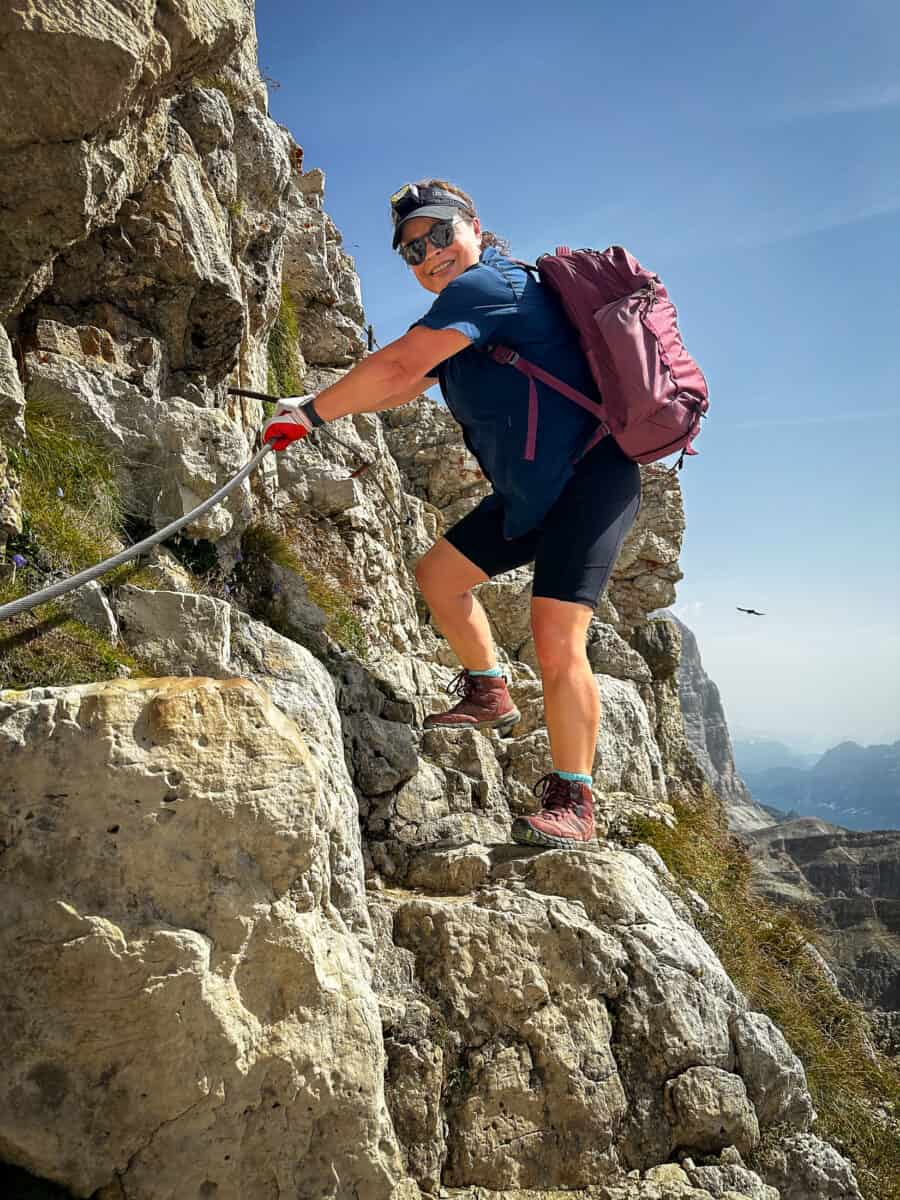
Real via ferrata means clipping into a steel cable and climbing a cliff face. We only got a taste of it: the WWI tunnels below Lagazuoi, reached by cable car from Passo Falzarego. Bring gloves and a headlamp for the dark stretches, and be sure to grab a helmet at the base station before you take the gondola up—Chris and I missed that in our research. At 5’2″, I got a few good knocks on my head. At 6’4″, Chris had to be even more careful.
The descent through tunnels carved into the mountain is about 45 minutes with steep, uneven steps all the way down. You won’t need to clip in, but hanging onto the cable is essential. Call it via ferrata for people who aren’t ready to commit.
3. Ride the Gondolas & Chairlifts

Chris and I rode more gondolas and chairlifts in two weeks than most people ever do in a lifetime. Seceda was the priciest and busiest, about €80 per person for the round trip on two connected gondolas, and it’s worth booking your time slot ahead if you can in busy months; we saw people walk up and buy same-day tickets when we were there at the end of August.
The Ortisei gondola to Alpe di Siusi was faster, cheaper, and an easy walk from our hotel. On our hiking day at Cinque Torri, we rode a gondola up, hiked around the towers and up to Rifugio Nuvolau then took a chairlift down to Rifugio Fedare instead of adding extrs steps back to the car. I broke down what every lift actually costs in our Dolomites itinerary.
4. Drive the Mountain Passes
Passo Giau might be the single best argument for renting a car with some oomph. Chris drove an automatic through its 29 numbered hairpin turns (tornanti), while I took full advantage of being a passenger princess and enjoying the view (or gripping the door handle, depending on the turn). Of all the Dolomites mountain passes we drove, this was the one that left the biggest impression.
The pass connects the Ampezzo and Livinallongo valleys with a nonstop 9% average grade, and it’s also a feature climb in the Giro d’Italia, so expect cyclists grinding up it all along the way. It’s also the gateway to several hikes, including Nuvolau and Cinque Torri, so don’t treat it as just a scenic drive-through.
We also drove up to Passo Falzarego for the Lagazuoi cable car, and one detour above Dreimädelhaus turned into a one-lane road built for two-way traffic, the kind where you and an oncoming car both stop and figure out who’s backing up.
5. Stand on a Glacier
The Marmolada glacier is the only glacier in the Dolomites, and getting there is an experience in itself: three separate gondolas from Malga Ciapela, switching cars at Antermoja and again at Serauta, before reaching the top at Punta Rocca. We were in the clouds the entire way up, so don’t expect guaranteed blue-sky views.
At the summit, workers were peeling back a giant covering used to protect the glacier from the summer sun, which was a stranger sight than the glacier itself. We didn’t linger long up there. Once you’ve checked the box of standing on a glacier, there’s not much more to do at that elevation.
6. Explore WWI Historical Sites

You can still walk through WWI sites in the Dolomites in three different places, each one a reminder of the brutal front line between Italy and Austria-Hungary here.
- At Lagazuoi, we followed the Austrian Mountain Troop Path along the ridge before dropping into the tunnel network (more on that in the via ferrata section above).
- At Marmolada, the Serauta cable car stop has a small WWI museum built into the mountainside, Museo Marmolada Grande Guerra, with more tunnels outside to explore.
- At Cinque Torri, we hiked right through old battlements and fortifications built into the rock at 5 Torri WWI Open-Air Museum with a stretch of trench line still visible between the towers.
None of it feels like a museum exhibit behind glass. You’re standing in the actual terrain soldiers fought over, more than a hundred years later.
7. Eat & Rest at a Rifugio
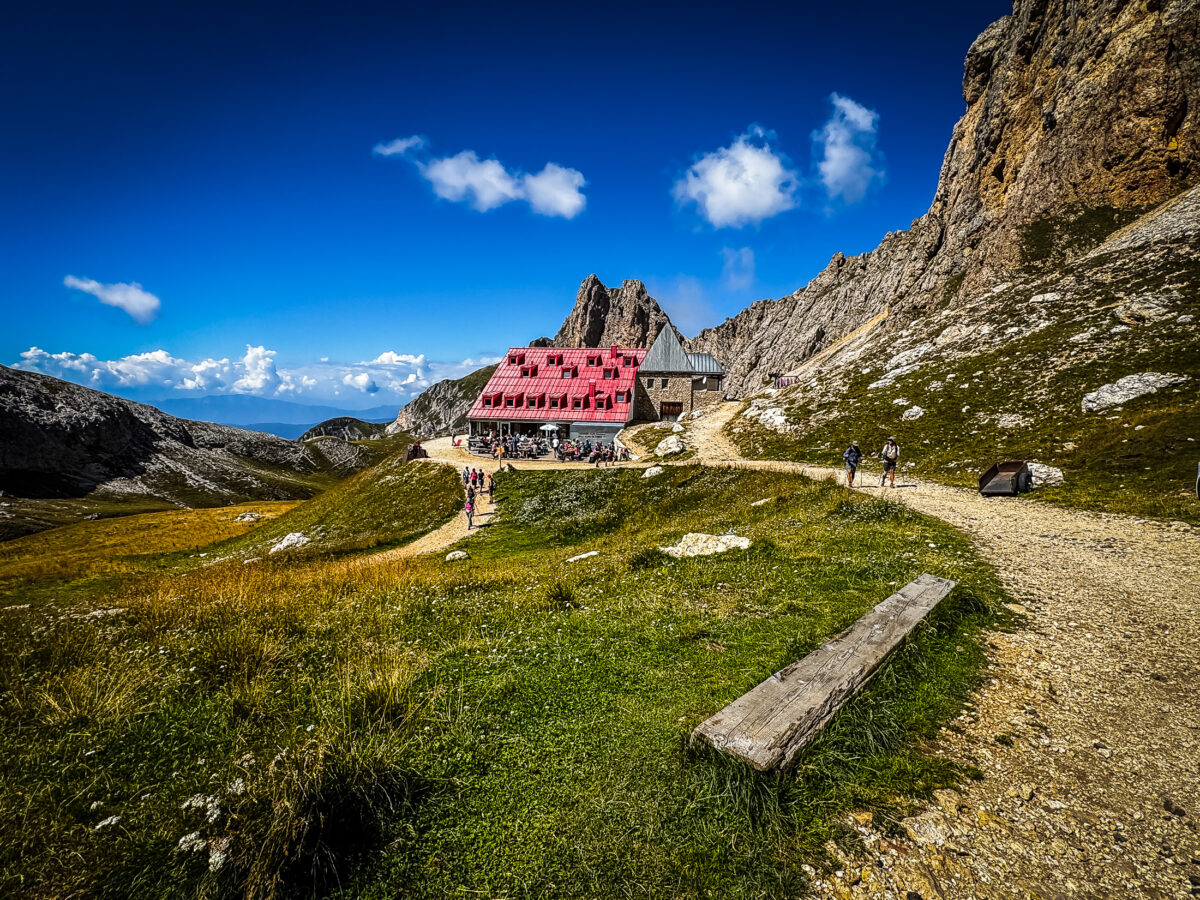
Rifugi are as much a part of hiking in the Dolomites as the trails themselves, and we stopped at nearly every one we passed. Gampen Alm had a live band playing John Denver’s, “Take Me Home, Country Roads”. Rifugio Schutzhaus served the best snack of the whole trip. Dreizinnenhütte gave us a much-needed break after the sketchy rockslide crossing on the Tre Cime circuit. Rifugio Col Gallina sits right on the road at Passo Falzarego, an easy stop even if you’re not hiking that day.
A quick note: this was rifugio-hopping on day hikes, not a multi-day hut-to-hut hiking in the Dolomites where you sleep at a different one each night. If that’s more your speed, that is its own kind of trip through the Dolomites.
8. Try the Local Cuisine
Dolomites food is a mashup of Italian, Tyrolean, and Ladin cooking, and after two weeks I had opinions. German dumplings at Gampen Alm came in three flavors, and pine nut and bacon beat beet by a mile. Rifugio Schutzhaus served something called shredded pancakes that I need to learn how to make. Rifugio Averau’s hamburgers were so enormous I folded the top bun in half like a taco shell, ditched the bottom bun, and called it a meal.
Rifugio Col Gallina’s Sacher cake, on the other hand, was so dry it could’ve doubled as trail food. And in Ortisei, it took me an embarrassingly long time to explain to our waitress that I wanted pizza with olive oil instead of tomato sauce. Turns out the words I needed were simply “white pizza”.
9. Visit Dolomites Lakes

Dolomites lakes look impossibly turquoise in every Pinterest photo, and ours were a mixed bag.
- Lago di Fedaia, the Marmolada reservoir, was the biggest letdown of the trip: much less impressive in person than online.
- Lago di Alleghe was a quick photo stop on our way to the Marmolada glacier gondolas.
- Laghetto di Fiè, near Castelrotto, was the most fun: a proper park with people swimming, picnicking, and sunbathing, and a bus back to the hotel when we were done walking.
- Laghi dei Piani: Two turquoise alpine lakes tucked below Rifugio Locatelli on the Tre Cime loop, a short detour most hikers skip. Here’s how to add them to your Tre Cime di Lavaredo hike.
- And after the long Tre Cime hike, we soaked our tired feet in Lake Toblach instead of driving the extra 90 minutes to Lago di Braies. Sometimes the backup plan wins.
10. Wander the Old Towns
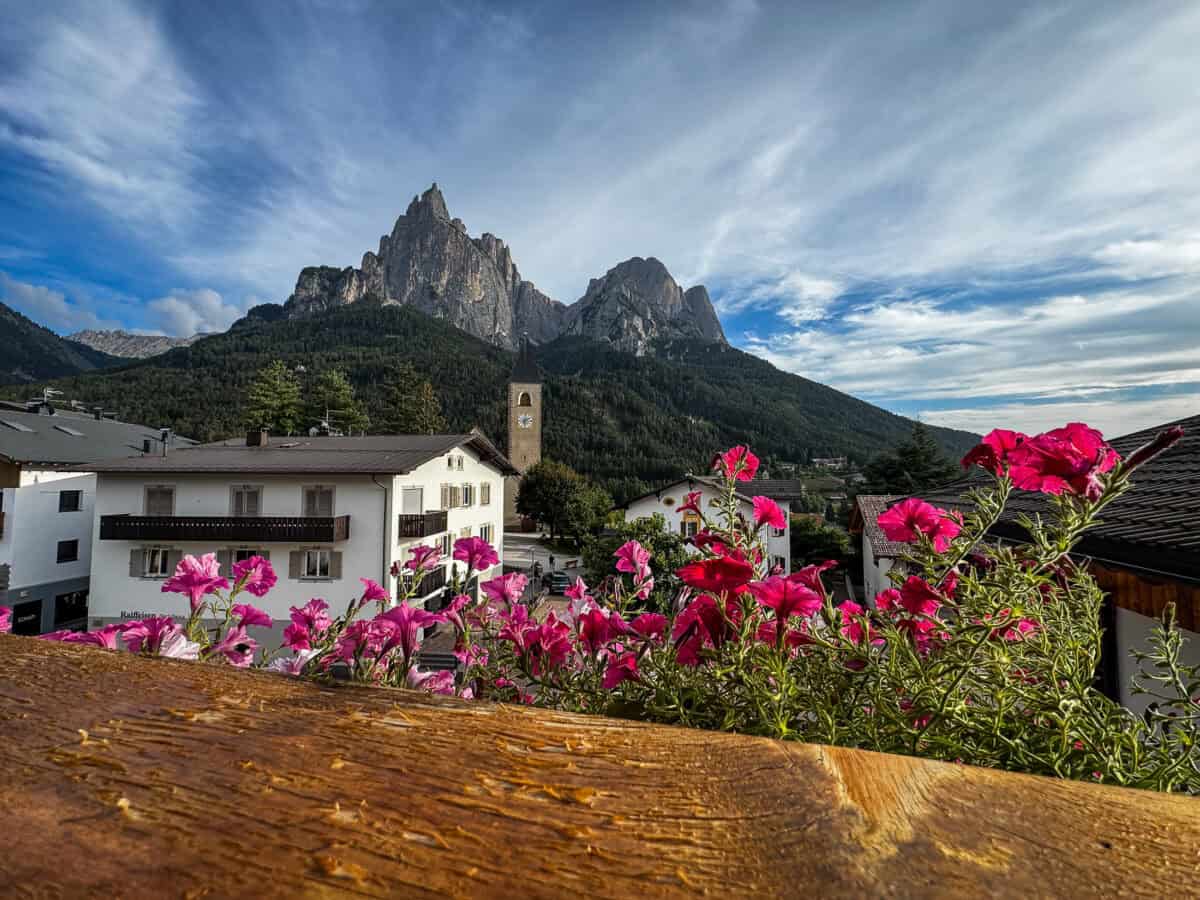
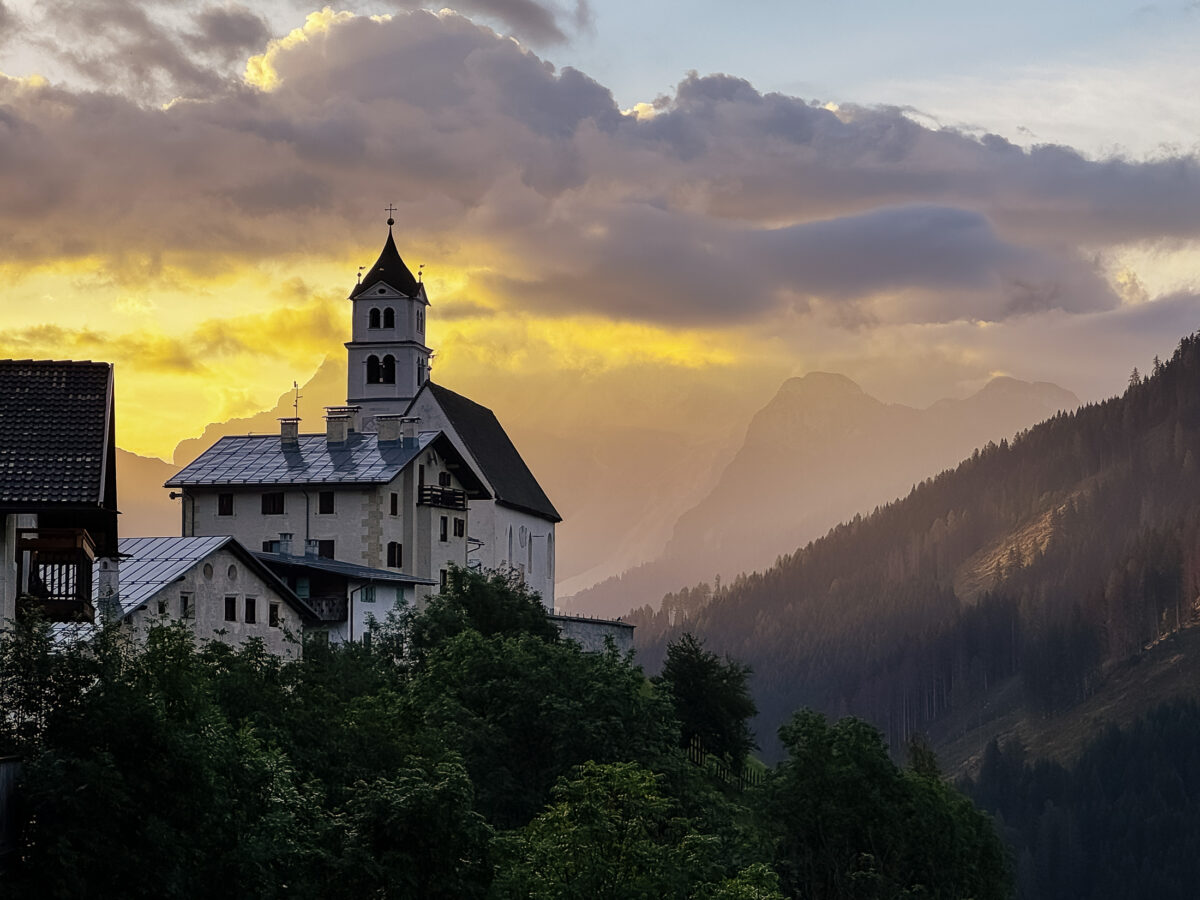
There’s no shortage of things to do in Dolomites villages and towns that hug the mountainsides, even without a trailhead in sight. Ortisei was our home base for the first four nights, and wandering its old town after dinner became a nightly habit. Colle Santa Lucia is barely a town at all: one chapel, one restaurant, a hotel, a post office, a handful of homes, and our rental, all perched on a hillside with the kind of view that made getting up for a sunrise photo worth it. Our host there sent us off with vegetables from her own garden.
Castelrotto was the loudest of the three, thanks to church bells that started at 5:30 am and didn’t let up, but the view of the old town and the Sciliar from our hotel room made up for the wake-up call. We also walked up to a pair of castle ruins on the hillside above town for a different viewpoint.
11. Visit Cortina & Its 2026 Olympic Sites
Cortina hosted part of the 2026 Winter Olympics, and Chris and I visited on a rainy morning expecting something amazing. What we found was a well-heeled old town with a lot of high-end shopping and not much else calling our name. We did luck into two Olympic leftovers: one of the ski jumps being dismantled, and the curling arena still standing. If you’re chasing Olympic history, budget an hour or two here, not a full day.
12. Chase the Best Photo Spots
Chasing the best photo spots in the Dolomites can mean chasing weather as much as location. We visited Seceda in the rain and fog. Though we never got the brilliant sunshine views and mountains for miles, the fog created a different kind of scene. Alpe di Siusi redeemed the trip a day later, with Schlern rising behind endless green meadow under a clear sky.
The Odle range from Dreimädelhaus at sunset was a postcard shot . Nuvolau at Passo Giau took two tries: cloudy and disappointing the first day, sharp and clear the second. Chris was kind enough to pull over so I could get the second shot. Cinque Torri, with its jagged towers rising over a grassy picnic spot, might be the single most photogenic stretch of trail we hiked.
The view right outside our hotel window in Castelrotto, looking over the old town rooftops toward the Sciliar, might be the one I’d frame and hang on a wall. The little chapel in Colle Santa Lucia, perched on its hillside with peaks behind it, was worth capturing any time of the day.
13. Stay Somewhere Charming (& Recharge)
Cesa dele Angele in Colle Santa Lucia came with a chapel view, a chance to spread out, and a charming village meant for wandering. ArtNatur Dolomites Hotel & Spa in Castelrotto was just the stay we needed at the end of our two-week hiking trip. Our package included half-board dining, indoor and outdoor pools, and saunas. We splurged on massages and loved the chance to recharge.
Related Post: Where to Stay in the Dolomites
14. Be Grateful You’re Not Biking
Biking in the Dolomites means climbing passes like Passo Giau, with its 29 hairpins and a 9% grade that doesn’t let up, and sharing the same narrow lanes as the cars and motorcycles. We watched cyclists grind up in the heat while we sat in an air-conditioned rental, and I have never felt more justified in my life choices.
We didn’t do any biking, but dozens of people come to the Dolomites for the challenge, and many even ship their own bikes over just to take on these extremely demanding mountain passes.
15. Consider Camping in the Dolomites
I am not a camper, so this was not in my wheelhouse, but we saw plenty of people trying, in pullouts, roadside laybys, and parking lots.
Wild camping, pitching a tent outside a designated campground, isn’t legal in the Dolomites and can get you fined, scenic road or not. Sleeping inside a parked, self-contained vehicle without a tent or awning is generally treated differently, but rules and enforcement vary by area and do change, especially in protected zones.
If camping is part of your plan for what to do in the Dolomites, look into an official campground or a legal “area di sosta” before you go, and check current local rules rather than relying on what other travelers say worked for them.
What to Pack For the Dolomites

Layers matter more than anything else on this list. We went from shivering in the wind and rain at Seceda to sweating on the Alpe di Siusi meadow. A packable puffy vest and rain jacket earned their keep more than once. If you’re doing the Lagazuoi tunnels, bring gloves and a headlamp, and plan on renting or bringing a helmet. Sturdy hiking boots are non-negotiable, especially for the uneven steps inside those tunnels. My Dolomites Hiking Packing List covers everything else you’ll want on the trail.
Travel Must-Haves
Sunscreen: Use sunscreen every day, not just on your beach days.
Laundry Detergent Pods: If you travel for more than a week, you will likely need to do laundry.
Hand Sanitizer: For all the things you touch throughout the day, hand sanitizer is essential.
Travel Adapter: Not all international countries use the same adapters. Be sure to check before you go. Purchase one here.
Travel Backpack: Chris likes his The North Face Recon Backpack. I use The North Face Surge backpack designed for women.
Crossbody Anti-Theft Bag: Pickpocketing is a real concern in busy cities. A secure crossbody bag keeps your belongings close without the bulk. I love the Travelon Anti-theft Messenger Bag.
Packing Cubes: A game changer for staying organized, especially when you’re moving between cities. Shop packing cubes here.
Portable Power Bank: Long days of sightseeing, navigation, and photography will drain your phone faster than you think. Don’t get caught without one. Shop power banks here.
Walking Shoes: You will cover a lot of ground. Comfortable, broken-in shoes are non-negotiable. Shop walking shoes here.
Favorite Camera: My go-to DSLR is the Canon 6D Mark II and it has never let me down. If you’re ready to go mirrorless, the Canon EOS R6 Mark III is the natural upgrade—and your existing Canon EF lenses work on it with an adapter. New to photography? Start with the Canon EOS R50.
Get a Travel Credit Card: We often travel worldwide for free using travel rewards. The Chase Sapphire Reserve is one of our favorite travel credit cards.
Favorite Electronics: Chris and I are Apple users—watches, phones, tablets, AirPods, and Apple AirTags for security. Don’t forget the cables and chargers too. Check out my electronics suggestions here.
Italy Quick Facts
- Official Language: Italian
- Capital City: Rome
- Population: 58.9 million
- Currency: Euro (€ or EUR)
- Power Outlet: Type L (3 round prongs) is standard and Type C (2 round pins)
- Emergency Number: 112
- Drive on the: Right side of the Road

Frequently Asked Questions
When is the best time to hike in the Dolomites?
Late June through September is your window. We hiked in late August and caught crisp air, thinner crowds than peak July, and rifugios still fully open. Go much earlier and you’ll hit snow on higher passes; go much later and lifts start closing for the season.
How many days do you need to see the Dolomites?
Five to seven days lets you actually breathe. I know people who try to “do” the Dolomites in two or three days , and they leave exhausted and cranky, having seen everything through a car window. Base yourself in one or two towns and take day trips rather than repacking every night.
Do you need a car, or is public transport enough?
You need a car. The bus network exists, but it’s built for locals, not for chasing sunrise light at a specific lake or catching the first gondola up before tour groups arrive. I rented one for the whole trip and never regretted it.
Are the Dolomites hikes beginner-friendly?
Plenty are. The gondola-assisted routes especially, where you ride up and hike a relatively flat loop at altitude, are approachable for anyone in decent shape. The via ferrata routes and anything involving exposed scrambling are a different story, and I’d only recommend those if you’re already comfortable with heights and some risk
Do you need a guide for via ferrata routes?
They’re doable solo if you have the gear and experience, but a guide is smart if it’s your first time clipping into cable. Renting gear and going in blind on an exposed route is how people get hurt.
Where should you stay, Cortina d’Ampezzo or somewhere else?
Chris and I based ourselves in Colle Santa Lucia, a tiny village that kept us close to the trailheads without Cortina’s crowds or price tag. Cortina’s still a solid home base if you want more restaurants and nightlife within walking distance, but don’t rule out the smaller villages. They’re just as quaint, often quieter, and can put you closer to the specific hikes you’re after.
Is it worth staying overnight in a rifugio?
I didn’t stay overnight myself, but everyone I talked to who did said it’s worth building into your itinerary. Waking up at altitude with nobody else around yet, watching the peaks catch first light, and hiking hut to hut is a completely different experience than a day hike. Book early though, the popular ones fill up months out.
Love this Post? Pin It!

The Dolomites Are Calling—Trade the Resort for the Trail
You’ve got the trails, the towns, and the gondolas mapped out. All that’s left now is booking the flight, breaking in those boots, and figuring out how many hikes you can logically fit into your vacation. The Dolomites don’t ask for much, just a decent pair of hiking shoes and a willingness to share some of the best views in the Dolomites with others.
Ready to hit the trails? Grab my free printable Dolomites packing list so you don’t forget a thing, from trail gear to altitude-specific extras.
You may also love…
- 17 Most Beautiful Swiss Villages Plus Surprising Adventures
- 15 Best Cities & Towns in Northern Italy You Need to Visit
- Best Travel Backpack for Europe, Adventures & Hiking
- 30 Best Day Hikes in the World to Stay Fit as You Travel
- Winter Hiking 101: Am I Crazy to Try Hiking in the Snow?
- Plan a Trip to Europe: 15 Essential Tips for First-Time Travelers