
Chimney Rock National Monument in Colorado is more than a couple of photogenic sandstone pinnacles. In this guide, you’ll learn the site’s history, how to book the guided tour (or hike it yourself), and why the Ancestral Puebloans who lived here 1,000 years ago were tracking a rare lunar alignment long before modern astronomy caught up.
Chris and I found Chimney Rock National Monument on a whim, tucked into our Colorado state-cation between hiking near Pagosa Springs. We came for the twin sandstone pinnacles you can see from miles away. We left having learned more about ancient astronomy than either of us expected.
Where Is Chimney Rock National Monument & How to Get There
This page may contain affiliate links. If you choose to click on one of the links and then make a purchase, Just Wander More may earn a small commission. The commission is paid by the company at no extra expense to you. Read the full disclosure here.
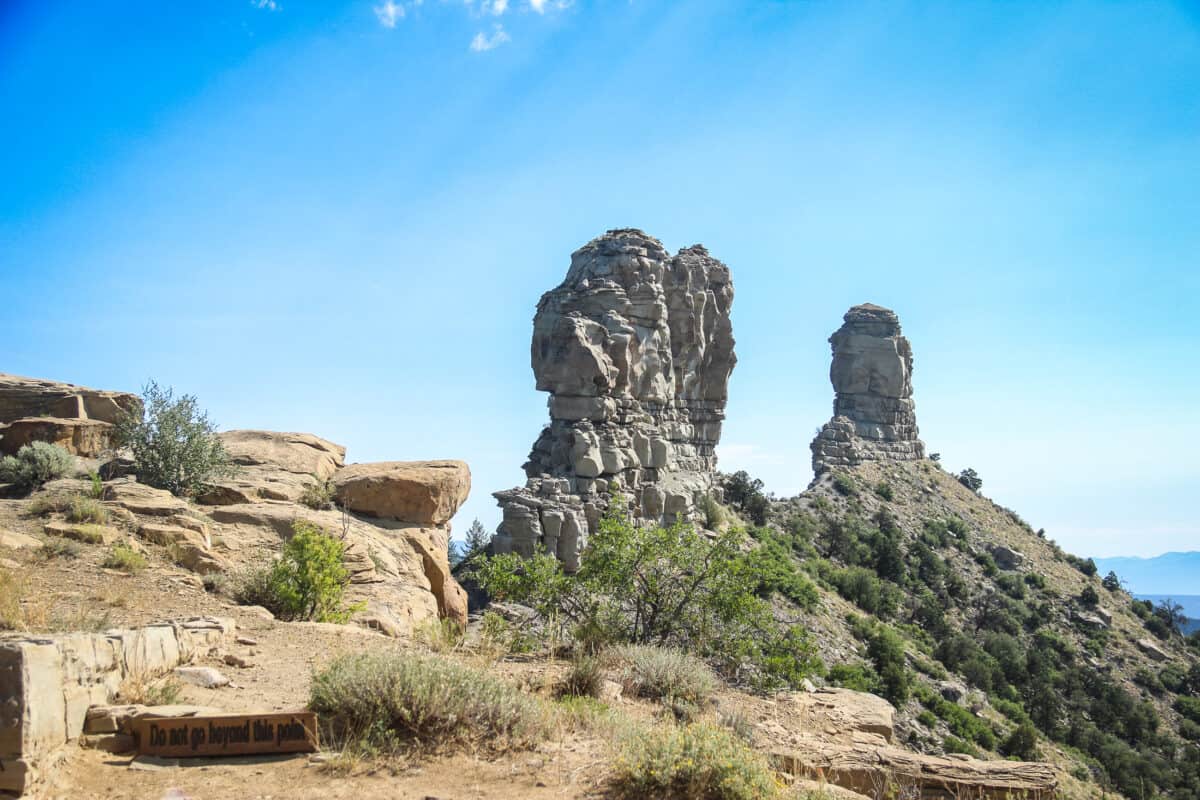
Chimney Rock National Monument sits in the San Juan National Forest, about 15 miles west of Pagosa Springs and 50 miles southeast of Durango. Chimney Rock has been protected since 1970 on the National Register of Historic Places, but it wasn’t until 2012 that President Obama designated it a National Monument, safeguarding nearly 4,800 acres under the Antiquities Act.
it’s an easy add to any road trip in the southwest corner of Colorado. The drive to the monument climbs through forest before opening up to the visitor center parking lot where every tour and trail starts.
From Pagosa Springs to Chimney Rock National Monument
The drive to Chimney Rock is a straight shot west on US-160 to CO-151, roughly 20-25 minutes from downtown Pagosa Springs. Chris and I actually spotted Chimney Rock from the air on a hot air balloon ride over Pagosa Springs. The view gives a bird’s eye perspective of exactly where to go once you’re back on the ground.
From Durango to Chimney Rock
From Durango, you should plan closer to an hour, heading east on US-160 toward Bayfield and Pagosa Springs before turning off onto CO-151.
Guided Tour vs. Self-Guided Great Kiva Trail
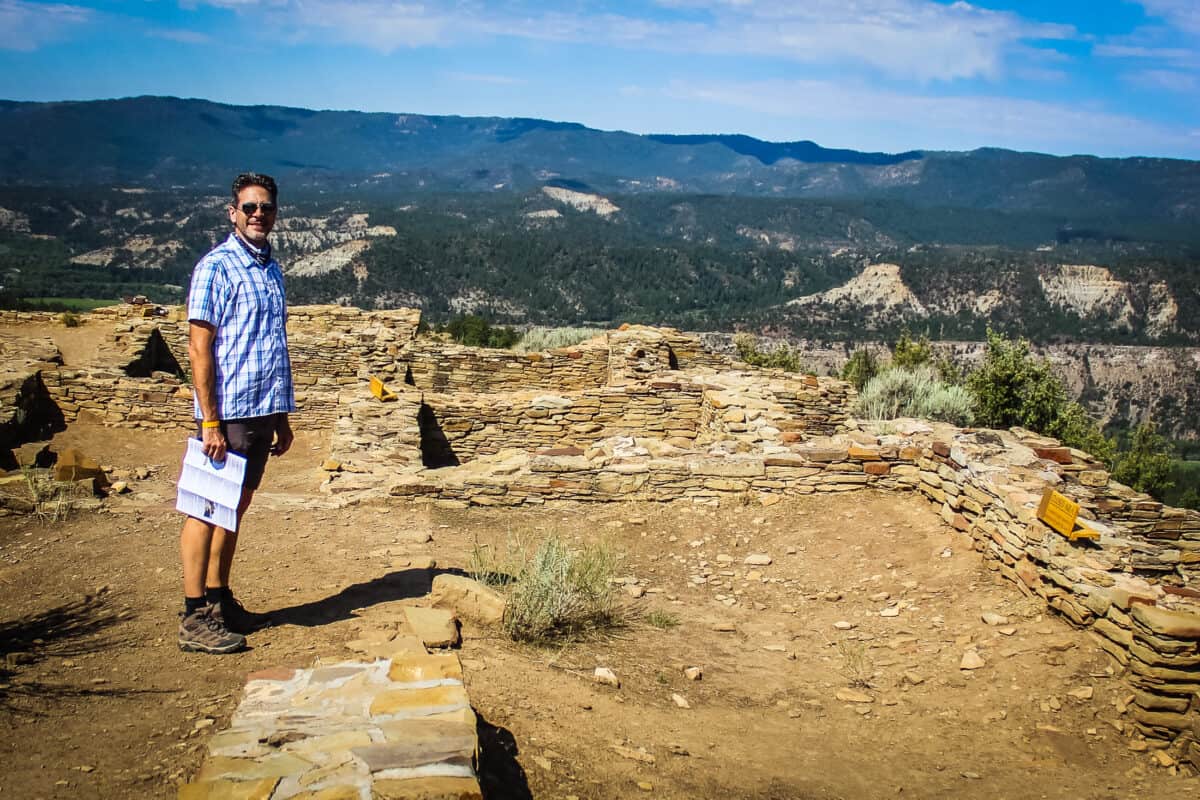
Chimney Rock splits into two trails, and which one you’re on depends on whether you book a tour or show up on your own.
Great Kiva Trail (Self-Guided)
The lower ridge trail is short, easy, and self-guided, passing pit houses and a reconstructed great kiva along the way. It’s wheelchair-accessible, but only open and staffed from 10:45 am to 2:45 pm, so it’s not a walk-up-anytime option.
Great House Trail (Guided Tour Only)
This Chimney Rock National Monument tour is the one Chris and I did, and it’s guided-tour-only. The trail climbs an exposed ridgeline to the Great House Pueblo, the Ridge House, and finally the base of Chimney Rock and Companion Rock themselves. Tours run about 2.5 hours with real elevation gain, so wear good trail shoes, not sandals.
Quick Facts for Visiting Chimney Rock National Monument
Quick Facts Before You Visit
- Chimney Rock National Monument is open daily, 9:00 am to 4:30 pm, mid-May through mid-October only.
- Vehicle pass: $20 (covers 5 days). Motorcycle: $10. Entrance is free with an America the Beautiful pass.
- Guided tours run $5-25 per person and depart at 9:30 am, 10:30 am, 1:00 pm and 2:00 pm, each lasting about 2.5 hours.
- Tours book up fast in summer, so reserve in advance on Recreation.gov.
- The Great Kiva Trail is self-guided and wheelchair-accessible, but staffed only from 10:45 am to 2:45 pm.
- Dogs aren’t allowed on tours, but there are shaded kennels near the visitor center on a first-come, first-served basis, the only ones I’ve ever seen at a monument or park entrance. A nice touch if you’re road-tripping with a pup who has to sit this one out.
What You’ll See at Chimney Rock
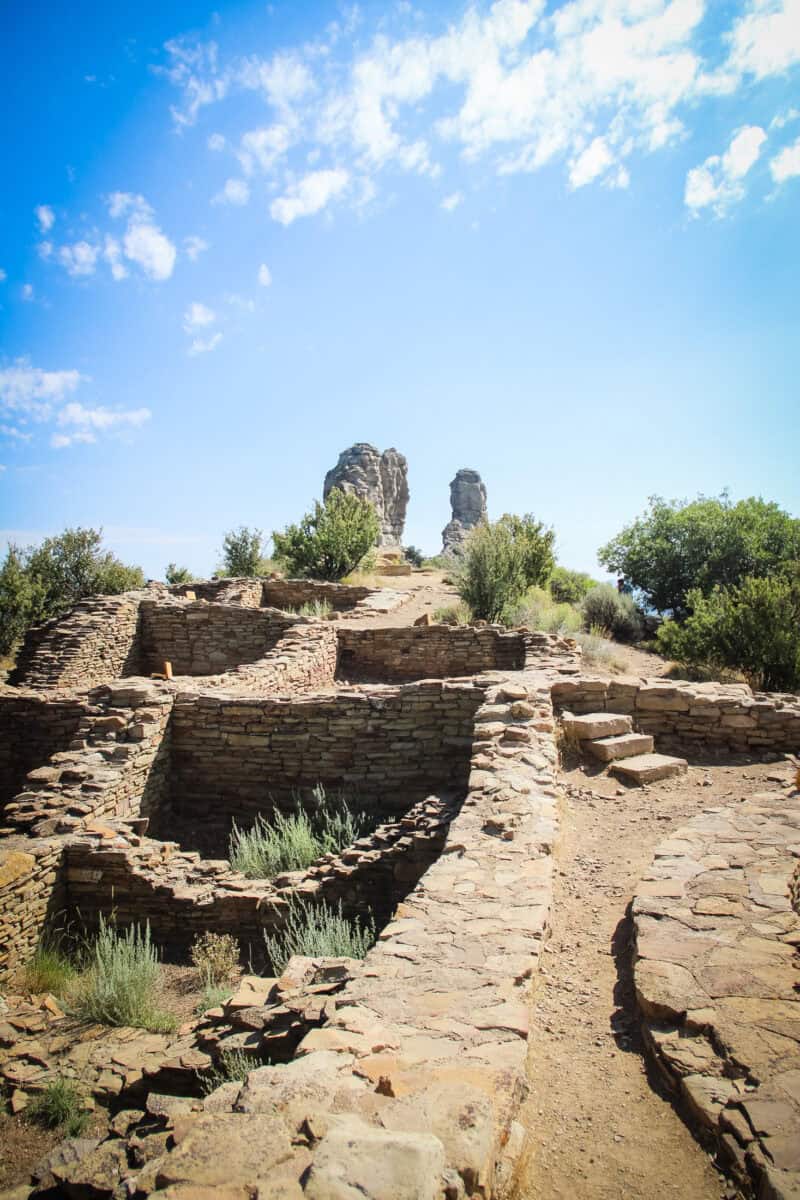
Between the two trails, you’ll pass through roughly 1,000 years of Ancestral Puebloan architecture, from underground ceremonial spaces to a multi-story pueblo perched on the ridge.
The Great Kiva & Pit House
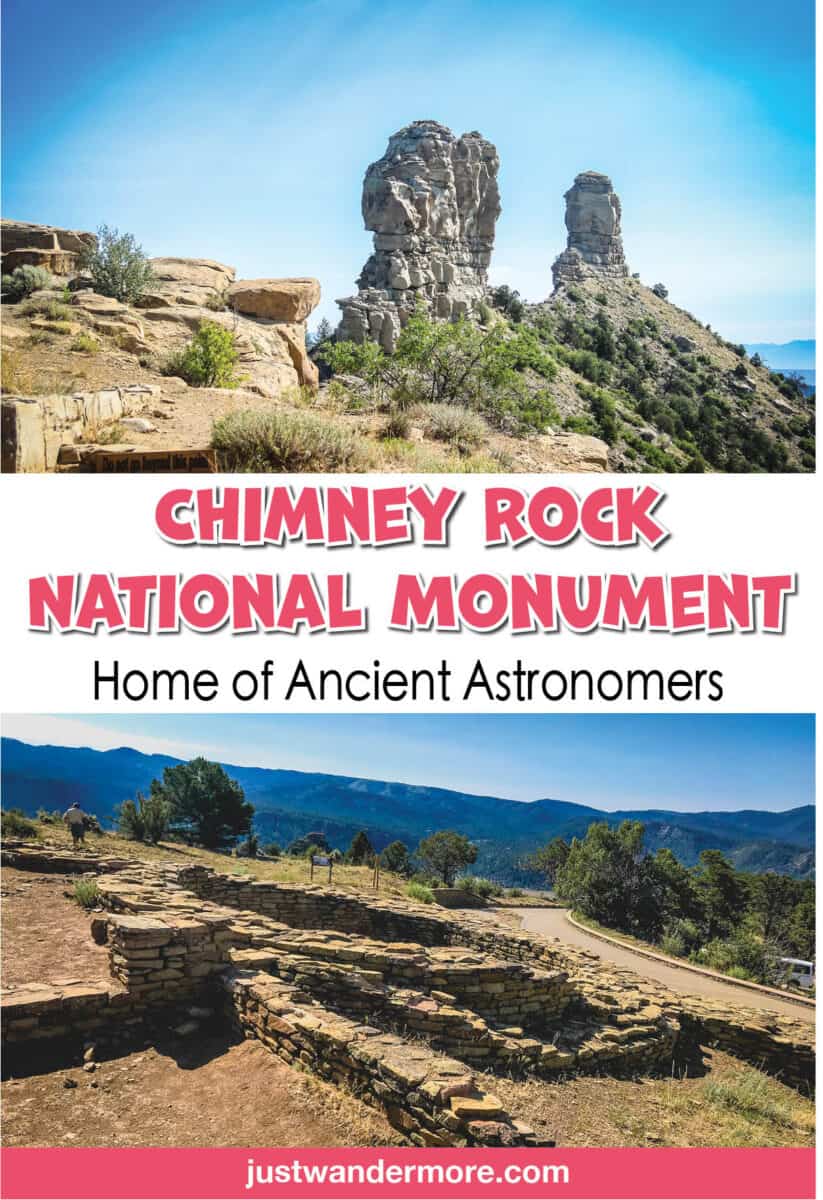
The Great Kiva is a large, partially reconstructed circular structure believed to have been used for community gatherings and religious ceremonies. Nearby, the pit houses show how the earliest residents here lived partially underground, insulated against the mountain winters and hot summers.
The Great House Pueblo & Ridge House
The Great House Pueblo is the site’s largest structure, a multi-room complex archaeologists tie to the same Chacoan culture found at Chaco Canyon in New Mexico. The smaller Ridge House sits just beyond it, closer to the pinnacles.
Chimney Rock & Companion Rock
The two sandstone spires that give the monument its name: Chimney Rock, the taller pinnacle, and Companion Rock beside it. They’re impressive up close, but their real claim to fame is astronomical, which is where the next section comes in.
The Lunar Standstill at Chimney Rock National Monument
Here’s the part that makes Chimney Rock more than just another set of ruins with a view: the Ancestral Puebloans who lived here appear to have built the Great House specifically to track a rare astronomical event called a Major Lunar Standstill.
Every 18.6 years, the moon’s orbit tilts far enough that the full moon rises directly between Chimney Rock and Companion Rock, framed perfectly by the two pinnacles. It’s not a single-night event. The alignment builds gradually and stays close to its extreme for a few years running, so the effect is observable across a multi-year window rather than one singular evening. If you are lucky enough to witness the lunar standstill, the moon aligns between the two sandstone spires and will be visible for only a few days throughout the year over the course of three years.
The most recent standstill peaked in 2024-2025, when the monument hosted night viewing events with telescopes, astronomers, and cultural presentations from tribes still connected to the site today. That window has closed. The next one won’t happen until 2044, so nobody will be catching this one live anytime soon, but it’s worth knowing about while you’re standing there where it happens.
Best Photo Spots at Chimney Rock National Monument
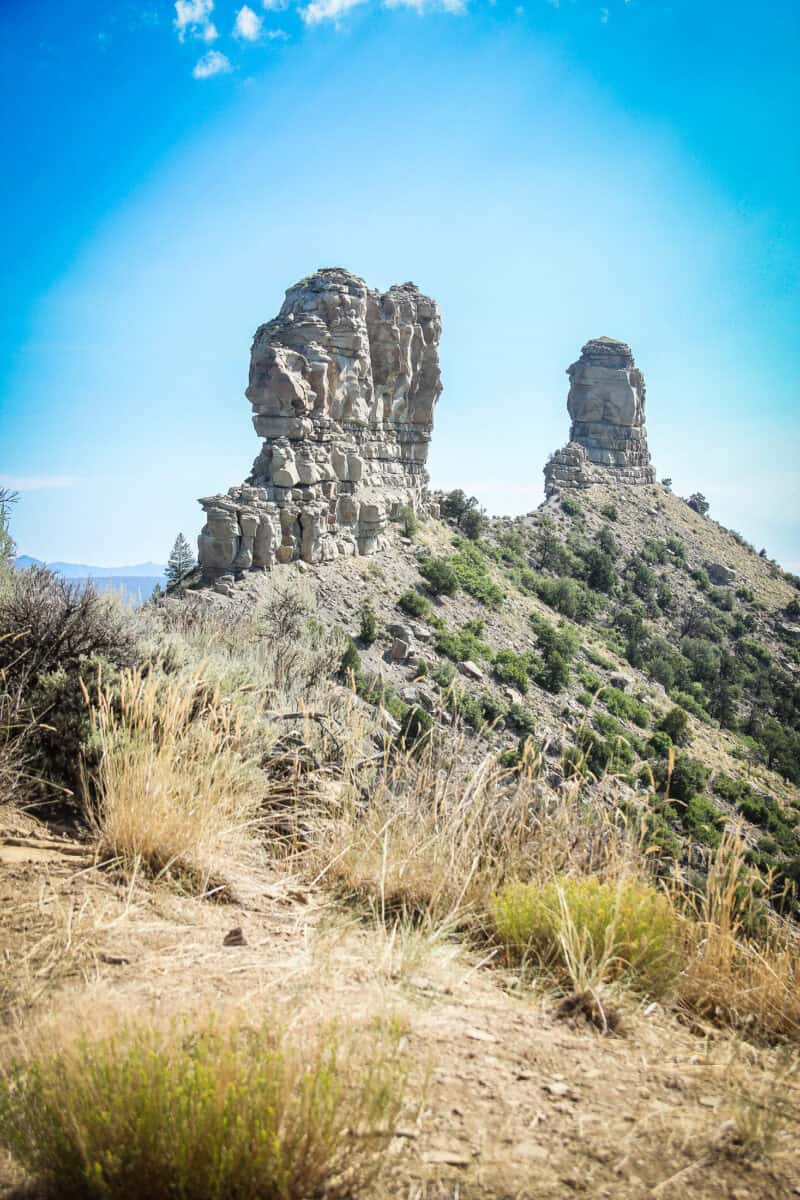
The whole upper mesa at Chimney Rock National Monument is scenic, but a few spots stand out if you’re chasing the shot. Morning tours catch softer light before the midday sun flattens everything out, so book the earliest slot you can if photos are the priority.
Best Photo Spots at Chimney Rock
- The overlook near the base of the pinnacles, right by the “do not go beyond this point” sign, gives you Chimney Rock and Companion Rock straight on with sky as your backdrop.
- Lower on the ridge, the wide grassy approach frames both pinnacles above the sagebrush for a more layered, landscape-style shot.
- From inside the Great House Pueblo ruins, angle your shot so the stone walls lead the eye straight up to the pinnacles in the background.
Tips for Visiting
There’s little shade along the ridge, and the closest services are back at the visitor center, so it pays to be prepared before you head up to the monument. A few other things worth knowing:
- Bring water and sunscreen. There’s nowhere to refill water or take cover once you’re on the trail.
- The gate to the archaeological sites closes at 3:15 pm, even though the monument itself stays open until 4:30 pm, so don’t plan a late-afternoon arrival if you want to actually see the ruins.
- Weather shifts fast at this elevation. We got caught in rain and hail later that same day on the Vallecito Creek Trail nearby, so pack a rain layer or umbrella no matter how clear the morning looks.
- Cell service is spotty on the mesa, so download your tour tickets and any offline maps before you leave Pagosa Springs or Durango.
- Wear real hiking/trail shoes if you’re doing the Great House Trail. The path is rocky and exposed in places.
Pair Your Visit With Hiking Near Pagosa Springs
Chris and I turned our Chimney Rock visit into a full day adventure by hiking the Vallecito Creek Trail afterward, a rugged out-and-back path through the Weminuche Wilderness. We didn’t get the full 12 miles in. A bridge was out and the weather had other plans and sent us back down early, but even the shortened version made for a good workout.
Where to Stay & Eat Near Pagosa Springs
Chris and I stayed in a vacation rental during our visit, which gave us more space (and a kitchen) after a day of hiking through hailstorms than a hotel room would have. For food, Riff Raff in downtown Pagosa Springs is an easy stop for solid burgers, and Pagosa Thai is another spot we tried that came highly recommended by locals.

What to Pack for Chimney Rock National Monument
Here are a few key items to pack for your visit. Grab my full Colorado Road Trip Packing List for everything else you should bring on road trips like this one.
Chimney Rock Gear
- Plenty of extra water. Try slipping a Camelbak hydropack into your The North Face Recon daypack.
- Zipfizz is great to add to your Iron Flask refillable water bottle for a little extra oomph.
- Snacks.
- Extra sun protection: sunscreen, a hat/visor, and sunglasses. Shade is basically nonexistent on both trails.
- A packable rain jacket. Colorado mountain weather turns fast, and there’s no cover on the ridge.
- A camera. I love the quality of photos that I get with my smartphone. The pocketable PowerShot SX740 HS is also a great compact option with 4K video and impressive zoom range.
- Hiking boots or trail shoes with grip. The Great House Trail has exposed, rocky sections. Chris loves his Merrells. I am trying out these Vasque Women’s Hiking Boots.
Frequently Asked Questions
What are the hours for Chimney Rock National Monument?
The monument is open daily from 9:00 am to 4:30 pm, starting in mid-May through mid-October. It’s closed the rest of the year.
How much does it cost to visit?
A vehicle pass is $20 and covers five days, or $10 for a motorcycle. An America the Beautiful pass covers your entrance too, so flash that if you’ve got one. Guided tours run $5-25 per person on top of that, and kids under 5 tour free.
Do I need a guided tour and how long should I plan to spend at the national monument?
Either works. The Great Kiva Trail is self-guided and open from 10:45 am to 2:45 pm, while the Great House Trail, where you get up close to the twin pinnacles, requires a guided tour that runs about 2.5 hours. Either way, budget at least half a day once you factor in the drive and time at the visitor center.
Are dogs allowed at Chimney Rock National Monument?
Dogs aren’t allowed on tours, but there are shaded kennels near the visitor center on a first-come, first-served basis if you’re traveling with a pup.
There’s more than one Chimney Rock in the US. How do I know I’m planning for the right one?
There are several places called Chimney Rock across the US, most notably a state park in North Carolina and a historic site in Nebraska. This one is Chimney Rock National Monument in southwest Colorado’s San Juan National Forest, home to the Ancestral Puebloan ruins and the lunar standstill alignment.
When is the best time to visit Chimney Rock National Monument?
The monument is only open mid-May through mid-October, and mornings tend to bring calmer weather and better light for photos before afternoon storms roll in. There’s very little shade along the trails, so an early tour also means less time hiking in direct sun.
When is the next Major Lunar Standstill at Chimney Rock?
This rare alignment happens roughly every 18.6 years. The most recent standstill peaked in 2024-2025. The next one won’t happen until 2044.
Love this Post? Pin it!
Chimney Rock, Colorado: Now’s the Time to See What the Ancients Saw
Chris and I drove to Chimney Rock expecting a cool scenic view and ancient ruins. We left with genuine respect for people who tracked the moon’s exact position 1,000 years before phones could do it for us. You don’t need to time your trip around a lunar standstill to make the drive worth it. The twin pinnacles, the ruins, and the fact that ancient astronomers picked this exact spot are reason enough to add it to your Colorado itinerary.
Before you hit the road, grab my free Colorado Road Trip Packing List so you’re not scrambling for a raincoat or wishing you had brought your trail shoes.
You may also love…
- 11 Things to Do in Pagosa Springs—Plus Epic Day Trips
- 20 Adventurous Things to Do In Durango, Colorado This Summer
- Colorado Adventures: 37 Epic Tours & Excursions
- 15 Hot Springs in Colorado: From Relaxing Resorts to Natural & Quirky Gems
- 25 Incredible Hikes in Colorado Near Denver
- 10 Epic Mesa Verde Tours & Cliff Dwellings on a National Park Road Trip
- 30 Essential Tips for Driving Through Mountains
