
Planning a trip to England for the first time can feel like a lot—a different currency, an unfamiliar transit system, and a nagging worry you’ll get something wrong the second you land. Here’s the good news: England is about as gentle a place as you can pick for your first international trip.
My own first trip abroad came together last minute, flights booked in a scramble and childcare figured out just in time, all so I could tag along when Chris headed to London for business. Just like that I was visiting England for the first time and taking my first-ever solo flight in one shot. Figuring out how to plan a trip to London on short notice with Chris’ help turned out to be easier than I expected, and that trip is exactly why England tops my list for anyone nervous about their first trip abroad.
Tips & Things to Know for Planning a Trip to England
This page may contain affiliate links. If you choose to click on one of the links and then make a purchase, Just Wander More may earn a small commission. The commission is paid by the company at no extra expense to you. Read the full disclosure here.
Before you get to the fun part—deciding where to go—there are a few practical things worth sorting out first. Here’s what actually matters when you’re planning a trip to England for the first time. If this trip is part of a bigger European adventure, start with my Plan a Trip to Europe guide for the big picture—then come back here for everything England-specific.
When to Visit
England’s weather doesn’t really have a bad season so much as a rainy one, which is most of them. Late spring through early fall (May through September) gives you the best odds of dry days and long daylight hours, though I’d pack a rain jacket no matter when you go. If you want fewer crowds and lower prices, shoulder season (April or October) is worth considering too.
London Airports
Six airports serve London, but as an American flying direct, you’ll really only be choosing between two: Heathrow and Gatwick. The other four are worth knowing about mainly if you’re connecting through Europe or hopping around the UK on a budget carrier.
- Heathrow (LHR): Handles the vast majority of nonstop US flights; drop-off costs £7 for 10 minutes
- Gatwick (LGW): JetBlue and Norse Atlantic fly nonstop from the US on select routes; drop-off costs £10 for 10 minutes
- Stansted (STN): European/budget routes only (Ryanair hub), no direct US flights; drop-off costs £10 for 15 minutes
- Luton (LTN): European/budget routes only (easyJet, Wizz Air), no direct US flights; drop-off costs £7 for 10 minutes
- London City (LCY): Closest to central London, mostly business routes to Europe, no direct US flights; drop-off costs £8 for 5 minutes
- Southend (SEN): Smallest, most limited routes, no direct US flights; drop-off costs £8 for 10 minutes
If you’re not renting a car, most of the drop-off fee stuff below won’t even apply to you—you’ll likely just hop on the Tube straight into the city from the airport. But if you’re taking an Uber, or having someone pick you up or drop you off, here’s what to know: there’s no gate or barrier where you pay. Cameras log your license plate automatically, and you’re billed online afterward—usually due by midnight the next day. Miss that window and it becomes an automatic fine (£80 at Heathrow, £95 at Luton), which is how a lot of people end up with a surprise charge days after they’ve already left the country.
Money & Currency
England uses the British pound (GBP), not the euro, which trips up a lot of first-time visitors headed to Europe. Contactless cards work almost everywhere, including on public transit, so you don’t need to carry much cash. You’ll likely still pay foreign transaction fees unless your card specifically waives them, but the real reason to call your bank before you go is fraud protection: skip that call and they may freeze your card the second unfamiliar overseas charges start showing up.
Pro Tip * If you wear an Apple Watch or have Apple or Google Pay set up on your phone, you can tap straight through the ticket barriers on the Tube and most public transit without ever buying an Oyster card. It’s honestly the easiest way to pay as you go, and one less thing to manage on your trip.
Not every card treats foreign transaction fees the same, so it’s worth checking yours before you leave. The Chase Sapphire Preferred charges $0 in foreign transaction fees and earns 5x points on travel booked through Chase, 3x on dining, and 2x on other travel purchases. Want more premium perks like airport lounge access and higher travel credits? The Chase Sapphire Reserve steps things up a notch, still with no foreign transaction fees. The Capital One Venture Rewards is another solid option, trading bonus categories for a flat 2x miles on everything if you’d rather not track what earns extra.

Trains, The Tube & Public Transit

Trains are genuinely one of the easiest parts of visiting England for the first time. London connects directly to the Cotswolds, the Peak District, and pretty much everywhere else you’ll want to go, and booking ahead usually gets you a much better fare than buying same-day.
If you plan to spend time in London, stick to trains and the Tube to get around the city itself, if at all possible. You don’t want to be behind the wheel there. Once you arrive in the Cotswolds or Peak District, though, trains and buses only get you so far. Local bus schedules can be infrequent and don’t reach every village, so renting a car is genuinely the best way to explore those areas once you’re there.

Driving in England

If you’re used to driving on the right side of the road, England will throw you a few curveballs: driving on the left, roundabouts everywhere, and manual transmissions still common in rental cars. It’s doable, and honestly the best way to explore areas like the Cotswolds and the Peak District where public transit doesn’t reach very far. Just skip the rental car entirely if you’re staying in London itself.
Once you’re out in the countryside, you’ll also run into narrow, single-track roads with passing places carved into the hedgerows every so often. If you meet an oncoming car, whoever’s closer to a passing place pulls in (or reverses back to one) to let the other through, and if you’re heading uphill, the general rule is you give way, not the car coming down. It sounds intimidating the first time, but you get the hang of it fast.
Related Post: 15 Essential Tips for Americans Driving in the United Kingdom
What to Pack
Pack as though you’re going to get rain, because odds are good you will. A packable rain jacket, comfortable walking shoes you’ve already broken in, and a few layers you can add or shed will cover you no matter what the sky decides to do. A universal adapter is non-negotiable since UK outlets are different from just about everywhere else.
Travel Must-Haves
Rain Jacket: England’s weather doesn’t care about your itinerary. A packable rain jacket earns its spot in every bag. Shop rain jackets here.
Sunscreen: Use sunscreen every day, even on rainy days.
Hand Sanitizer: For all the things you touch throughout the day, hand sanitizer is essential.
Travel Adapter: Not all international countries use the same adapters. Be sure to check before you go. London uses the Type G (3-pin). Purchase one here.
Travel Backpack: Chris likes his The North Face Recon Backpack for travel. I use The North Face Surge backpack designed for women. Be sure to bring a waterproof backpack cover. It will not only keep your camera gear dry when the sky inevitably opens up, but also your backpack and everything else inside. Shop backpack covers here.
Crossbody Anti-Theft Bag: Pickpocketing is a real concern in busy cities. A secure crossbody bag keeps your belongings close without the bulk. I love the Travelon Anti-theft Crossbody Bag.
Packing Cubes: A game changer for staying organized, especially when you’re moving between cities. Shop packing cubes here.
Portable Power Bank: Long days of sightseeing, navigation, and photography will drain your phone faster than you think. Don’t get caught without one. Shop power banks here.
Walking Shoes: You will cover a lot of ground. Comfortable, broken-in shoes are non-negotiable. Shop walking shoes here.
Favorite Camera: My go-to DSLR is the Canon 6D Mark II and it has never let me down. If you’re ready to go mirrorless, the Canon EOS R6 Mark III is the natural upgrade—and your existing Canon EF lenses work on it with an adapter. New to photography? Start with the Canon EOS R50.
Laundry Detergent Pods: If you travel for more than a week, you will likely need to do laundry.
Favorite Electronics: I am an Apple user—watch, phone, tablet, AirPods, and Apple AirTags for security. Don’t forget the cables and chargers too. Check out my electronics suggestions here.
England Do’s & Don’ts

England is easy to adjust to, but a few local habits will make you look like less of a tourist (and keep you safer).
- Do stand on the right on escalators, especially in the Tube. Standing two-wide blocks the people trying to walk past, and Londoners notice.
- Do queue properly and wait your turn. Queuing is basically a national pastime in England, and cutting in line is one of the fastest ways to get side-eyed.
- Do look right before crossing the street. Traffic runs the opposite direction from what you’re used to, and it’s an easy habit to forget mid-trip.
- Do learn the rules of the road. Review UK signage and driving rules before you get behind the wheel—roundabouts and left-side driving take some getting used to. The official Highway Code covers everything.
- Do close gates behind you if you’re hiking through farmland in the Cotswolds or Peak District. Public footpaths often cross working farms and pastures, and an open gate can let livestock wander.
- Do say please, thank you, and sorry more than you think you need to. It’s less about formality and more about just fitting in.
- Don’t expect rain to cancel your plans. Locals don’t let it stop them, and neither should you—pack for it and carry on.
- Don’t assume every small shop or café takes cards for tiny purchases. Most do, but it’s worth having a little cash as backup in rural areas.
- Don’t block a footpath or narrow village lane for a photo without checking for foot or car traffic first. Charming as they are, they’re still someone’s daily route.
One of the top things to know before visiting England: Don’t Forget Your ETA!
As of 2025, U.S. citizens need an Electronic Travel Authorisation (ETA) to enter England—it’s not a visa, just a quick online application (similar to the U.S. ESTA). I got mine approved within an hour of applying. Apply before you travel at gov.uk.
Words & Phrases to Know
Don’t let the shared language fool you—England and America don’t always speak the same English! A few common swaps to know before you go:
- Queue — Line
- Loo — Bathroom/Restroom
- Chemist — Pharmacy
- The Tube/Underground — Subway
- Lift — Elevator
- Petrol — Gas
- Boot — Trunk of car
- Car park — Parking lot
- Chips — French fries (and Crisps — potato chips)
- Takeaway — Takeout
- Cheers — Thanks (also used casually as “bye”)
Where to Go: London & Beyond

Once the logistics are sorted, here are a few travel tips for England whether you choose to spend your time in London or exploring outside the city.
Where to Stay in London
Figuring out how to plan a trip to London starts with picking the right home base—here’s where I’d recommend as a first-timer.
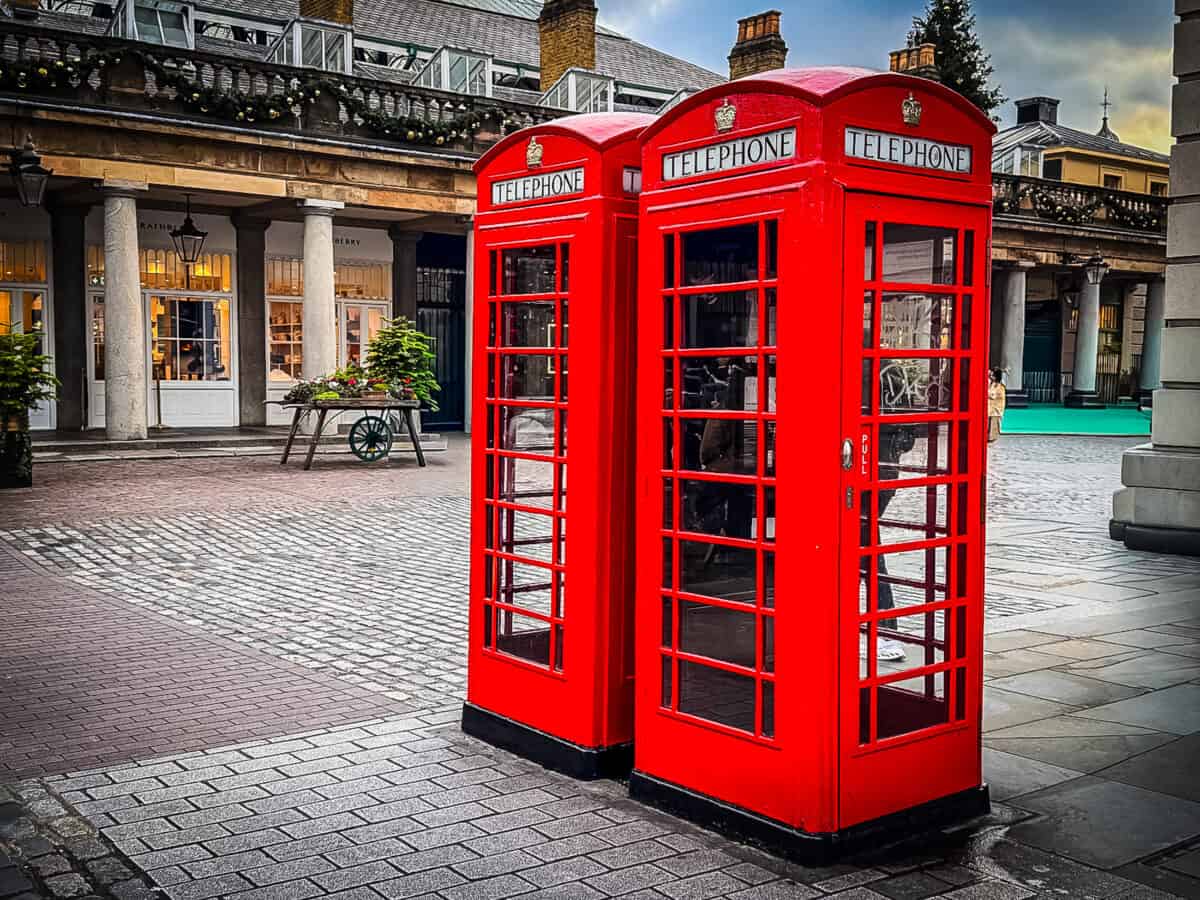
- Covent Garden: Central, walkable, close to the theaters and those classic red phone booths.
- South Kensington: Quieter, museum-heavy (Natural History, V&A), still an easy Tube ride to everything else.
- Notting Hill: Colorful, charming, great for a slower pace and market mornings.
- Southbank: River views, walkable to major landmarks, and a little more budget-friendly.
Wherever you land, stay close to a Tube station—you won’t want to be driving in London anyway. Browse hotels on Booking.com to find your home base.
Must-See Spots in London

London is probably where your trip starts and ends, and it deserves at least a few days on its own. I’ve already written an entire guide on the best things to do in London (steal whatever fits your crew). Here are a few must-see spots in London:
- Buckingham Palace — Catch the Changing of the Guard if the timing lines up.
- Tower of London — Home to the Crown Jewels.
- Westminster Abbey & Big Ben — Iconic and steps from each other.
- The London Eye — For skyline views over the city.
- The British Museum — Free entry, world-class exhibits.
- Covent Garden — Shopping, street performers, and those classic red phone booths.
- Borough Market — Food stalls and local flavor.
Day Trips from London
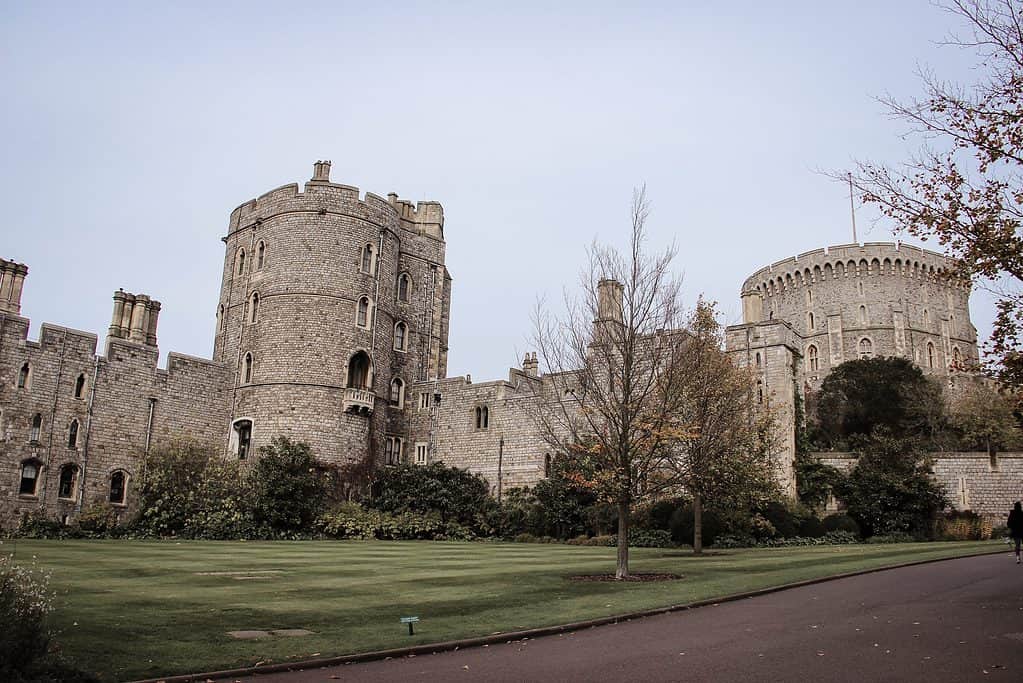
London isn’t the only stop worth making. Bath, Windsor Castle, Cambridge, and Brighton are all easy day trips by train, no rental car required. Stonehenge takes a bit more effort (train to Salisbury, then a bus or taxi the rest of the way), but it’s still doable without a car. I’ve mapped out train times and full details for over a dozen of these countryside escapes if you want to build out your own day-trip itinerary.
Related Post: 23 Charming English Countryside Getaways & Day Trips from London
The Cotswolds

If you can spare more than a day, the Cotswolds are totally worth it. Villages like Snowshill and Bourton-on-the-Water are the kind of honey-stone, impossibly photogenic places you’ll want to wander slowly, not rush through on a day trip. Renting a car gives you far more flexibility than relying on trains and infrequent local buses, especially if you want to hit more than one village in a day. I’ve got a full guide to planning the perfect Cotswolds trip if this one’s calling your name.
The Peak District

The Peak District trades cute villages for dramatic scenery: moody hikes, historic estates like Chatsworth House, and market towns like Bakewell that are worth a slow afternoon. Like the Cotswolds, a rental car gives you far more freedom to explore than waiting on infrequent local buses. I’ve got a full breakdown of the best things to do if you want to plan a proper visit.
Related Post: 10 Best Things to Do in the Peak District (Perfect for a Weekend Break)
How Many Days Do You Need
If London is your whole trip, four days is enough to hit the highlights without feeling rushed. But if you want to get outside the city too, you’ll want more time. I’d plan on at least 7-10 days if you’re adding even one region like the Cotswolds or the Peak District, and closer to two weeks if you want to do both plus a few of the countryside day trips. Don’t try to cram it all in on a first trip. England rewards a slower pace more than a packed checklist.
Chris and I have been to London a number of times, and we still find new things to do. You don’t have to fit everything in with one visit.
England Quick Facts
- Official Language: English
- Capital City: London
- Population: 58.8 million
- Currency: British Pound (GBP)
- Power Outlet: Type G (bring an adapter not a converter)
- Emergency Number: 999
- Drive on the: Left side of the road

Frequently Asked Questions
Do I need a visa to visit England as a U.S. citizen?
No. As of 2025, U.S. citizens need an ETA (Electronic Travel Authorisation) instead of a full visa for short tourist stays. It’s a quick online application, not a visa.
How many days do I need in England?
For a first trip, plan on 7–10 days if you want to split time between London and the countryside without feeling rushed.
Is England expensive to visit?
It can be pricier than other parts of Europe, especially in London, but day trips to the countryside and free museum entry help balance out the budget.
Does England use the Euro?
No. England uses the British Pound (GBP), not the Euro.
Can I drink the tap water in England?
Yes, tap water is safe to drink throughout England.
Do I need to tip in England?
Tipping isn’t as expected as it is in the U.S. A 10–12% tip for good service at sit-down restaurants is appreciated but not required.
Is it easy to get around England without a car?
Yes. Trains and buses connect most major cities and towns well, though a car gives you more flexibility for rural areas such as the Cotswolds and Peak District.
Love this Post? Pin it!

England Is Calling—Go Say Hello
Looking back, England turned out to be the easiest possible place to start my international travel journey—easy to navigate, easy to fall in love with, and different enough to feel like a real adventure. If I could go from “never left the country” to flying solo to London to meet Chris, you can plan your own first trip to England too. Don’t forget these travel tips for England: get your ETA, pack for rain, and get ready to explore.
Want to keep all of this info handy? Grab my free England Travel Checklist below so you don’t have to scramble to try and find it later.
You may also love…
- 7 Pretty Villages in the Cotswolds You Need to See!
- 15 Most Beautiful Places in the Cotswolds (Bring Your Camera…You’ll Need It!)
- 17 Romantic Things to Do in the Cotswolds for a Charming Couples Getaway
- Cotswolds vs Peak District: My Honest Opinion
- Chatsworth House Christmas Market: A Festive Day Out in the Peak District
- 10 Tips for Walking Mam Tor: An Easy Peak District Hike with Epic Views
- Pre-Trip Checklist: 35 Important Things To Do Before Leaving on Vacation