
If you have never driven in the mountains before—or simply haven’t tackled mountain roads recently—navigating narrow, curvy roads and steep mountain passes can be a genuine challenge. First-time mountain drivers especially can find the experience more intense than expected.
As Chris and I regularly travel through the Rocky Mountains in Colorado, we encounter plenty of drivers who could use a few pointers on both driving technique and mountain road etiquette. These 30 tips for driving through mountains will help you feel confident, prepared, and safe on every curvy road and high-altitude pass you encounter.
30 Essential Tips for Driving Through Mountains
This page may contain affiliate links. If you choose to click on one of the links and then make a purchase, Just Wander More may earn a small commission. The commission is paid by the company at no extra expense to you. Read the full disclosure here.

It is pretty obvious after following some drivers on curvy mountain roads that driving through mountains makes them nervous—and understandably so. They go slower than the posted speed limit, brake before every curve, and ride their brakes all the way down the mountain pass instead of downshifting. If any of that sounds familiar, these 30 tips will help you drive with more confidence and a lot less white-knuckling—whether you’re tackling a single pass or planning a full Colorado road trip through the Rockies.
What Should You Do Before Driving in the Mountains?
Before you tackle any curvy mountain roads, a little preparation goes a long way. Here are the most important things to bring, ways to keep your vehicle road-ready, and a few downloads that will make driving through mountains safer and more enjoyable.
1. Fill Your Gas Tank Before You Go

Gas stations are few and far between on mountain roads—and when you do find one, expect to pay a premium. Mountain gas prices can run $2-$4 more per gallon than what you’d pay closer to home. Running low or running out of gas on a Rocky Mountain road trip is not just inconvenient—it can be extremely costly and potentially dangerous. Fill up before you leave and top off whenever you have the chance, especially in winter when weather can change fast.
2. Pack Food & Water
Whether you’re heading out for a picnic, a hike, or a scenic drive through the mountains, packing food and water just makes sense—and essential preparation for driving through mountains in any season. Bring easy-to-store packaged food like power bars, granola bars, and trail mix along with plenty of water, even if you’re in a rental car. Mountain emergencies are rare but being stranded without supplies makes a bad situation significantly worse.
3. Have a First Aid Kit in the Car
A first aid kit is one of those things you hope you never need—but you’ll be glad you have it if you do. Small, compact kits are easy to store in your glove box or backpack and are available on Amazon for just a few dollars. Don’t leave home without one, especially when driving through mountains where the nearest urgent care may be miles away.
4. Be Sure to Maintain a Roadside Emergency Kit
A roadside emergency kit takes the food, water, and first aid kit one step further—and is essential for high altitude driving where conditions can change fast and help may be far away. Keep a well-stocked kit in your car at all times. Here’s what to include:
- Flashlight
- Matches
- Extra batteries
- Whistle to signal for help
- Hand wipes and hand sanitizer
- Jumper cables
- Basic tools
- Ice scraper
- Blanket
- Car cell phone charger
- Roadside flares/glow sticks
- Small, foldable shovel
- Glass break tool
5. Check the Weather Before You Leave

When Chris and I plan our mountain hikes and road trips, checking the weather before we leave is non-negotiable. Knowing the conditions helps us dress appropriately and pack the right gear for whatever the mountains throw at us. Weather in the mountains—and all of Colorado—can change fast and without much warning. Come prepared with rain jackets and hats in summer, gloves and puffy jackets in spring and fall, and full winter gear for the colder months.
Check out my Travel Gear on Amazon
6. Keep Your Vehicle Well Maintained
Before driving through mountains, give your car a thorough once-over to make sure you’re road-ready. Mountain roads are not the place to discover a mechanical issue. Check the following before you go:
- Brakes and battery are in good working order
- All fluids are topped off: oil, transmission, coolant, and windshield washer fluid
- Tires are properly inflated, with decent tread and a working spare
- Snow scraper in the car
7. Download Maps for Your Mountain Adventures

Cell service in the mountains is unreliable at best and nonexistent at worst. Chris and I have watched cellular infrastructure improve along Highway 36 in Colorado over the past few years—but losing reception through a mountain pass is still very common.
My recommendation as a local: download your maps before you leave so you have offline access when service drops. Don’t count on GPS to save you when you’re in a dead zone on a curvy mountain road.
8. Download Some Awesome Playlists, Podcasts or Audiobooks
Spotty cell service doesn’t just affect your GPS—it can cut off your streaming too. Download your favorite playlists, podcasts, and audiobooks before you lose service so the entertainment keeps flowing no matter how remote the road gets. Sirius XM is another solid option if you have a subscription—satellite signal works where cell service won’t.
Looking for Spotify playlist suggestions for your next mountain road trip? Marlin del Ray and Songs to Sing in the Car are both worth adding to your queue.
Driving Safely in the Mountains

Driving safely through mountains requires a different skill set than freeway driving—and knowing what to expect makes all the difference. Steep grades, sharp hairpin curves, and sections with no guardrails are all part of the experience on curvy mountain roads. These tips will help you navigate from the valley floor to the top of the world—and back again—with confidence.
9. Mountain Driving is Different than Freeway Driving
Driving through mountains is a fundamentally different experience than freeway driving. Two-lane roads, slower speeds, intermittent passing lanes, and sections with no guardrails are the norm rather than the exception. The road to Estes Park leading into Rocky Mountain National Park is a perfect example—stay alert, stay in your lane, and leave the freeway mindset behind.
10. Keep Right Except to Pass in Passing Lanes

Over the past few years, Chris and I have noticed a real shift in driving etiquette on mountain roads—slower drivers camping in the left lane instead of moving right is increasingly common. To pass them legally you end up having to use the right lane, which is backwards and frustrating for everyone. The rule is simple: if you are not actively passing another vehicle, pull over to the right. It’s both common courtesy and traffic law.
The rule is simple: if you are not actively passing another vehicle, pull over to the right. It’s both common courtesy and a traffic law.
11. Make Use of Slow Traffic Pullouts

If you’re not used to driving through mountains, chances are you’ll be going slower than most other drivers on the road—and that’s okay. What’s not okay is holding up a line of cars behind you when pullouts are available. Check your rearview mirror regularly. If you see a line of cars building up, that “Slow Moving Vehicles Use Pulloffs” sign is talking directly to you.
Pull over and let traffic pass. Here’s why it matters:
- Impatient drivers behind you may attempt to pass in unsafe spots.
- A line of cars in your mirror adds stress to YOUR drive—pull over and enjoy the scenery.
- Driving faster than your skill level creates genuinely dangerous situations on curvy mountain roads.
- It’s simple courtesy and the right thing to do—it makes everyone’s day a little less aggravating.
12. Mind the Posted Speed Limits

Posted speed limits on mountain roads are set for a reason—they reflect what is safe for that specific stretch of curvy mountain road. Going too fast risks losing control, especially on tight curves and steep grades. Going too slow backs up traffic and frustrates other drivers. If you’re not comfortable at the posted speed limit, move right in passing lanes or use pullouts to let others pass—it keeps everyone safer on the road.
13. Never Pass on a Curve
Chris and I have watched drivers attempt to pass other cars right before a curve—passing blind with no idea what’s coming in the other direction. It’s one of the most dangerous things you can do when driving through mountains. Only pass when you have a clear, unobstructed view of the road ahead and the dotted line confirms it’s legal to do so. If you’re stuck behind a slower driver on curvy mountain roads, exercise patience—wait for a straight stretch with good visibility and plenty of room to pass safely. No destination is worth the risk.
14. Never Pass on a Double Line
Double yellow lines on mountain roads are not suggestions—they mark sections where traffic engineers have determined passing is unsafe. Just like speed limits, these markings are the result of careful study by people who know mountain road management. Crossing a double line to pass on a curvy mountain road is illegal and dangerous. Don’t do it.
15. Leave Space Between You & the Car in Front of You
This one is common sense—but common sense goes out the window for a surprising number of drivers on mountain roads. Leave plenty of space between you and the car ahead. On curvy mountain roads with steep grades and unpredictable stops, a safe following distance gives you the reaction time you need if the car in front brakes suddenly. Tailgating on a mountain pass is a recipe for disaster.
16. Be Prepared for Unexpected Tight Turns

On mountain roads the terrain dictates the curves—not the other way around. Expect frequent and sometimes unexpected tight turns, especially on older mountain roads that were built around the landscape rather than engineered for modern driving speeds. Signage will alert you to most curves ahead but the best advice is simple—always be prepared for the unexpected.
17. Use Caution When There are No Guardrails

Not all mountain roads come with guardrails—and some of the most scenic ones have none at all. Old Fall River Road in Rocky Mountain National Park is a perfect example—a one-way gravel road with stunning views and nothing between you and the drop-off. When guardrails are absent, slow down, stay as far from the edge as possible, and keep your focus on the road rather than the scenery. The view will still be there when you pull over safely.
18. Use the Parking Brake if You Pull Over
The amazing scenery in the Rocky Mountains draws Chris and I back again and again throughout all of the months of the year. We make RMNP reservations to hike all of the time and plan our vacations around visits to other national parks and mountainous regions in the United States and around the world because of the amazing views!
If you do pull over to enjoy the view, always engage your parking brake before stepping out of the car. Mountain road shoulders are rarely flat and a vehicle that rolls away on a steep grade is a situation nobody wants to deal with. Take the view in—just keep your car in place while you do it.
19. Watch for Wildlife
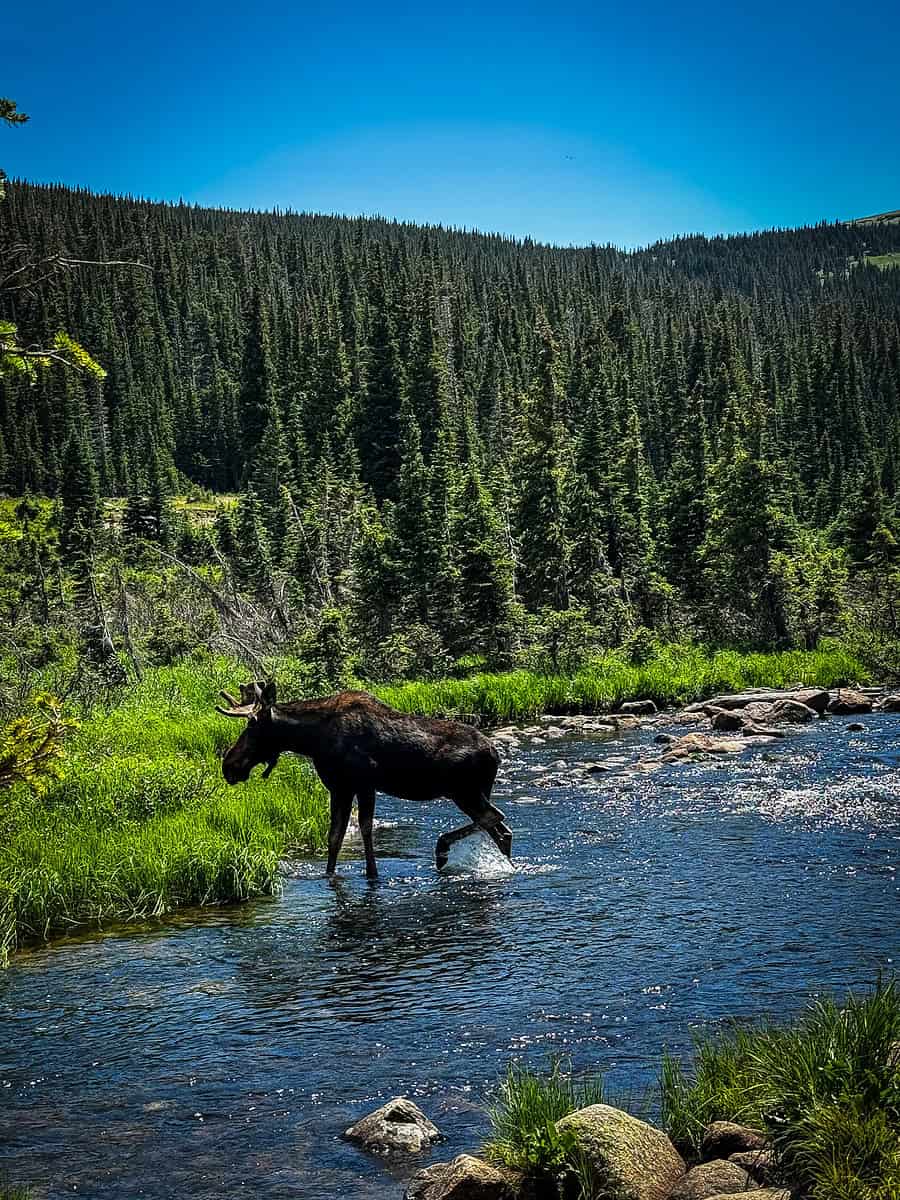
Assume you will encounter wildlife on mountain roads—especially deer after dark. If an animal crosses your path, do not swerve to avoid it. Swerving on a curvy mountain road can cause a far more serious accident than hitting the animal. When driving through Rocky Mountain National Park, you also need to watch for other drivers who stop suddenly in the middle of the road when they spot elk, moose, or deer. Wildlife jams are real and they come out of nowhere.
Top Tip * Do not approach wildlife. Do not get out of your car unless it is safe to do so. And if you stop your car to look, be mindful of the traffic around you.
20. Begin Braking Before the Turn
The rule of thumb for driving through mountains is simple: brake before the turn and accelerate through it. Sharp turns and curvy roads are the norm on mountain roads—and braking early gives you the control you need to navigate them safely. If you brake too hard mid-turn you risk losing control of your vehicle. Remember—you can enter a turn too slowly as many times as you want, but taking a turn too fast on a mountain road means it’s game over.
Rule of Thumb: Brake before the turn and accelerate through.
21. Pay Attention to Overheating
Your car overheating—not you. Steep inclines and declines put extra strain on both your engine and your brakes when driving through mountains. If your engine temperature starts climbing, turn off the air conditioning and roll down the windows to reduce the load. If you smell your brakes on the way down a mountain pass, that’s your cue to pull over and give them a rest—that smell means they’re overheating. Let the engine idle for a few minutes before continuing. To avoid brake overheating altogether, pay close attention to the next tip.
22. Downshift! Don’t Ride Your Brakes!
When driving downhill through mountains, use your engine and transmission to slow the car—not your brakes. Shifting to a lower gear controls your speed without overheating your brakes, and according to the National Park Service you can often get most of the way down a mountain without using your brakes much at all. For automatic transmissions use “L” or “2.” Once you’re back on level ground, shift into drive and resume normal braking.
Whether you’re driving an RV, towing a trailer, or in a regular vehicle, follow these tips to protect your brakes on mountain roads:
- Don’t ride your brakes—use quick taps on the brakes so they have time to cool off between slow downs.
- Brake before a turn, not during it.
- Shift to a lower gear when driving downhill.
- Drive at a consistent safe speed rather than accelerating on straight sections and braking for corners.
- If you smell your brakes pull over and let them cool for 10-20 minutes.
23. Take Note of Road Signs

Road signs are your best friend when driving through mountains. They warn you of recommended speeds heading into curves, alert you to steep grades ahead, flag dangerous conditions, signal lane changes, and warn of ice on bridges. Pay attention to every single one—they exist for a reason. You probably won’t encounter a hula hooping pedestrian sign, but keep your eyes open just in case.
24. Stay Focused
It only takes a second of inattention to veer out of your lane on a winding mountain road—and a second is all it takes for things to go wrong. Put the phone down, leave the radio alone, save the snacks for a pullout, and let your passengers handle the navigation. Keep your eyes on the road and both hands on the wheel. Driving through mountains demands your full attention—give it that.
25. Give Right of Way
On narrow mountain roads the rule is simple—uphill traffic has the right of way. If you’re heading downhill and meet an oncoming vehicle on a tight stretch, it’s on you to yield and pull over if possible. The driver heading uphill has less control and fewer options, so give them the space they need.
26. Use Your Headlights
Headlights are about more than seeing the road—they help other drivers see you too. In inclement weather always drive with your headlights on, and turn them off only when visibility improves. If you’re driving through mountains at night on a less-traveled road, use your high beams to illuminate the road and spot wildlife earlier—but dim them immediately when you see oncoming traffic. In fog, snow, or rain turn your brights off entirely as they reflect back and actually reduce your visibility.
27. Don’t “Hug” the Centerline
On narrow mountain roads it’s tempting to drift toward the centerline—it feels safer than the edge, especially when there are no guardrails. Resist that urge. Hugging the centerline puts you dangerously close to oncoming traffic on mountain roads where visibility is limited. Stay in your lane, trust your positioning, and keep both lanes of traffic moving smoothly and safely.
28. Stop & Enjoy the View
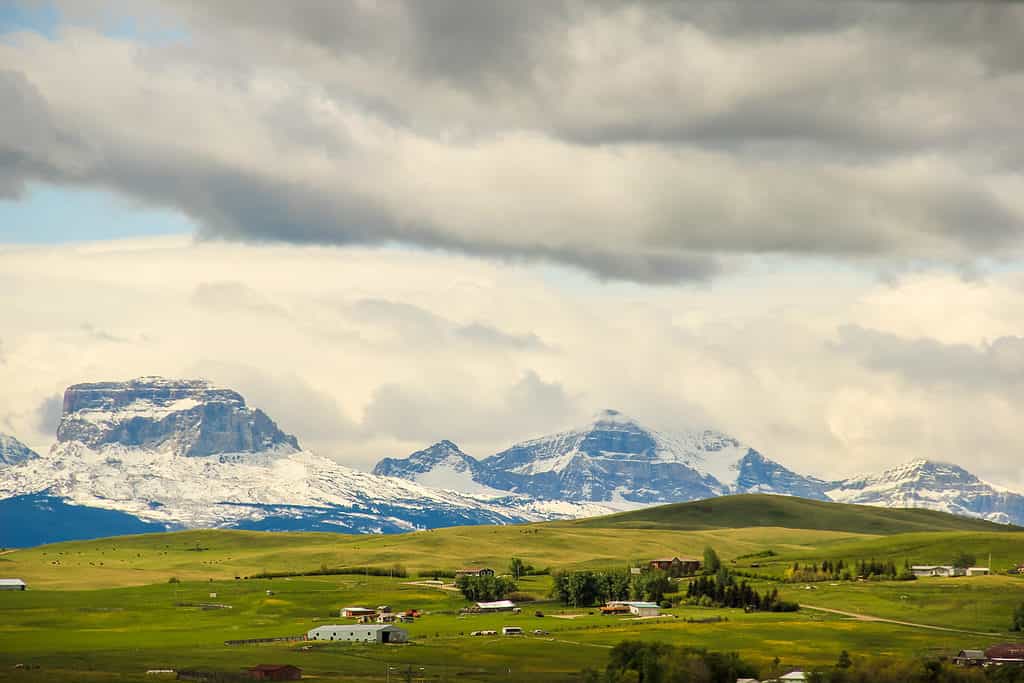
Chris and I used to tell our girls how lucky they were to live so close to the Rocky Mountains—“Some people plan their whole lives for a trip to these mountains!” As you can imagine, there was a lot of eye rolling. Whether you’re driving through mountains an hour from home or on a once-in-a-lifetime road trip, pull over and take it all in. The view is always worth the stop.
Want to make the most of your mountain drive? GuideAlong audio tours are GPS-based tours that trigger automatically as you drive—stories, history, and hidden gems delivered right when you need them. Check out these available tours:
- Utah Mighty 5 National Parks
- Acadia National Park
- Big Sur Pacific Coast Highway
- Blue Ridge Parkway
- Glacier National Park
- Rocky Mountain National Park
Click the box to check to see if there is a GuideAlong Tour where you’ll be traveling this year.

29. Exercise Extra Caution in the Winter

Mountain weather can change in minutes—and in winter, snow is measured in feet rather than inches, sometimes accumulating in just a few hours. Notice the snow sticks in the photo above—they serve double duty, marking both the depth of the snow and the edge of the road when everything looks the same shade of white.
Make sure your tires are rated for winter conditions and in good shape before driving through mountains in the colder months. This is not the season to wing it.
30. Don’t Drive While Impaired
This one should be common sense—but here we are. The only absolute way to ensure you are safe to drive through mountains is to have a BAC of zero. Curvy roads, steep grades, no guardrails, and unpredictable conditions demand your full faculties. If you’ve been drinking, hand over the keys or wait it out. No mountain view is worth the risk.

Frequently Asked Questions
Is driving in the mountains easy?
Driving through mountains takes practice and skill—it’s not difficult once you know what to expect, but first-timers should come prepared. These 30 tips will help you feel confident before you ever leave the driveway.
What are some of the greatest dangers of driving on mountain roads?
There are plenty of hazards to mountain driving: steep grades, winding roads, blind curves, falling rocks, wildlife, sightseeing motorists, bicyclists and unpredictable weather. Staying alert and prepared is your best defense against all of them.
What are some hazardous conditions you encounter on mountain roads?
Expect rain, fog, wind, snow, and ice depending on the season. Beyond weather, watch for heavy traffic, road construction, accidents, emergency vehicles, and headlight glare on curvy mountain roads—especially at dawn and dusk.
What gears are best for mountain driving?
Low gears are your best friend when driving through mountains—gears 1 to 3 on a manual transmission or L and 2 on an automatic. Low gears give you extra power climbing uphill and hold your speed on the way down so you’re not constantly riding your brakes.
Is it safe to drive in the mountains at night?
Driving through mountains at night is safe if you’re prepared—use your headlights, watch for wildlife, and stick to roads you’re familiar with. Deer and other animals are most active at dawn and dusk, so extra vigilance is essential. Avoid unfamiliar curvy mountain roads in the dark until you’ve driven them in daylight first.
What type of vehicle is best for mountain driving?
All-wheel drive or 4-wheel drive vehicles are ideal for driving through mountains, especially in winter conditions. That said, a well-maintained front-wheel drive vehicle with good tires handles most paved mountain roads just fine in dry conditions. Where AWD or 4WD really earns its keep is on snow, ice, or unpaved mountain roads.
Love this Post? Pin it!

Now It’s Time to Hit the Road—You’ve Got This
Driving through mountains is one of the most rewarding experiences a road trip can offer—stunning scenery, fresh air, and memories that stick. It takes a little practice to feel confident on curvy mountain roads, but with these 30 tips you’re already ahead of most drivers out there. Stay alert, be courteous, and pull over when you need to—the mountains will still be there when you do.
Before you hit the road, grab my free Colorado Road Trip Packing List so you show up prepared for every mile of the journey.
You may also love…
- 15 Best Places in Colorado This Summer for Family Travel
- 15 Hot Springs in Colorado: From Relaxing Resorts to Natural & Quirky Gems
- 19 Super Cool Things to Do In Estes Park Colorado for Families
- 15 Reasons Why Outdoorsy People Love Boulder, CO in the Summer
- Rocky Mountain National Park Itinerary & Adventures
- Colorado Adventures: 37 Epic Tours & Excursions
- Tre Cime di Lavaredo Hike in the Dolomites: Best Trail & Parking Tips
Very important advice! I learned how to change a wheel ages ago and it saved my trip quite a few times. Great tips for safe driving!
These are great driving trips! My favorite is to stop and enjoy the view. On road trips, my husband and I often grab a sandwich from a local place and look for a beautiful spot to have lunch and take in the views.
Great tips! Many of these can be life saving for road trippers. Thank you for sharing.
Great tips for driving everywhere.. people always seem like they are esp invincible when they’re in the mountains and it makes me so fearful for everyone’s safety… I don’t think to use a parking break on a mountain, but will now that you mention it…
These are great tips to drive safely in the mountains. A very different experience for this kind of road trip.
These are great tips! I remember my first drive through the Canadian Rockies. I was alone and terrified lol. The best tip is to have off-line or paper maps, as cell phones aren’t always available. Thankfully, I had researched beforehand and saw this tip.
Great tips! I don’t drive but I’ll share these with the driver next time for safety as my family likes to go camping.
Great article! These mountain driving tips are practical and easy to follow. The advice about using lower gears on downhill roads and staying alert on curves is especially helpful. Thanks for sharing!